Botanical Name: Asparagus officinalis
Plant Type: Perennial
The asparagus, Asparagus officinalis, is one of the few members of the plant family Liliaceae utilised as a food source by humans. A large number of species of asparagus exist, being found throughout Europe, Asia, and Africa, with the species A. officinalis existing as a wild plant in Europe. A cold-climate perennial, asparagus has been both wild harvested and cultivated over a long period of time for its newly emerged shoots in spring, known as spears.
Asparagus is a plant that should be more widely grown in Australian gardens. Most people have never tasted freshly harvested asparagus spears, which have a more delicate flavour than the overwhelming flavour found in the tinned product. Although they may take several years of cultivation before producing their first crop, once established, plants will go on producing for decades. Asparagus plants exist as separate sexes, with male plants generally producing larger, more numerous spears.
Planting asparagus is a sound investment as they thrust up tender spears that herald the start of a new gardening year and they increase their harvest for up to 20 years.
Varieties
Choice of asparagus varieties is very limited, there being a few dozen varieties in cultivation worldwide, of which only a handful are available in this country. Both open-pollinated and hybrid varieties are available, with the hybrids generally being a year or two earlier in the time taken to produce their first crop. Some varieties have been developed to produce all male plants from seed and only male plants are sold as bare-rooted stock, known as crowns.
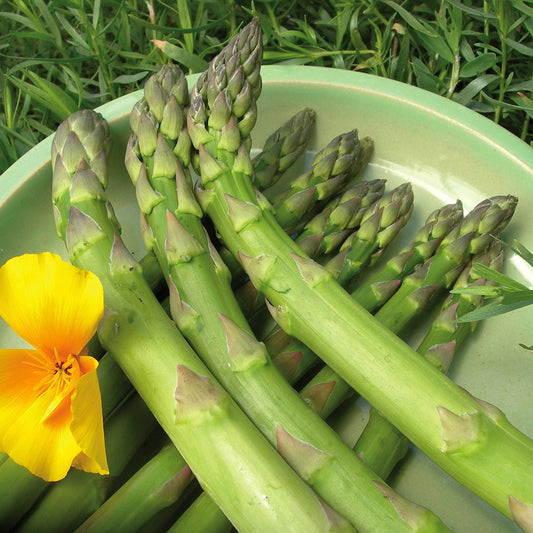
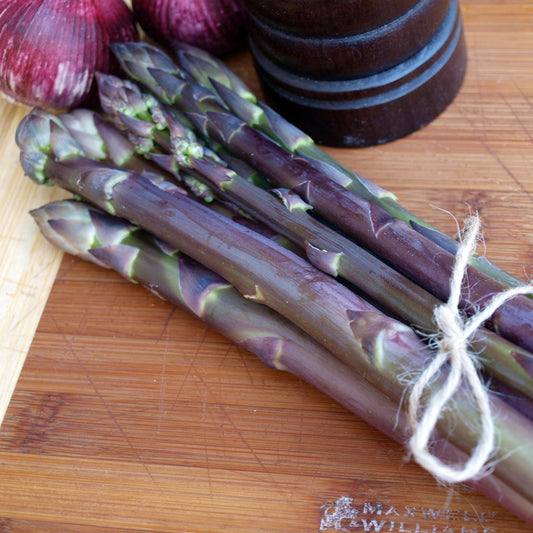
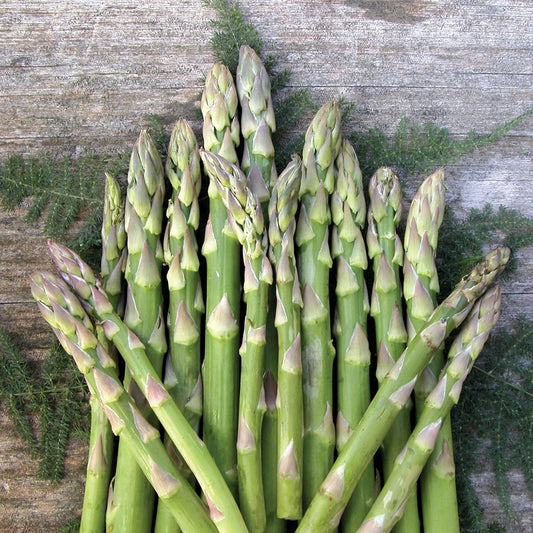
‘Mary Washington’ produces an abundance of green, slender spears during spring. ‘Sweet Purple’ is a wonderful purple variety with an earthy flavour. ‘Fat Bastard’ is named for its delicious plump spears and is a proven garden performer.
Cultivation
As asparagus is a long-term crop, expending some effort on site selection and preparation is strongly recommended.
Asparagus can be grown from seed or from transplanted crowns. The main disadvantage of establishing plants from seed is that they may take a number of years longer to mature to first harvest than crowns. However, it has been reported that if seeds are first sown into Jiffy pots and then transplanted, this will accelerate the maturation process by a season.
Most gardeners establish asparagus through the transplanting of purchased crowns during late winter to early spring. Crowns are placed at intervals of about 50 cm in a shallow trench about 10 cm deep or on a flat bed and subsequently covered with 1 cm to 5 cm of soil. Shoots will eventually emerge from the ground and the plant will grow and develop fern-like foliage, which, in exposed sites, should be supported by staking to prevent wind damage. The ferns eventually die back during autumn, and once completely brown should be cut back close to the ground. The following spring, the plants will resprout to repeat the growing cycle. Each spring plants should be fed, preferably with a liquid fertiliser, to promote vigour.
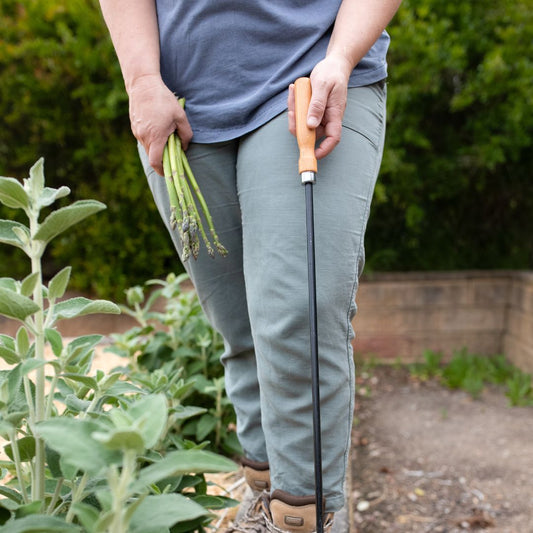
In general, asparagus plants are not vigorous enough to withstand the harvesting of spears until their third season. Emerging spears should be harvested, with a sharp knife, when they are about 10 cm to 15 cm above the soil, and should be cut off below soil level, taking care not to damage the roots or other shoots. Depending on climate, spears can start emerging as early as late August. During the first season of harvest, it is prudent to limit harvesting to four to six weeks, so as not to over-tax plants. In subsequent seasons, harvesting can take place over several months, but should be terminated by early December to allow the plants sufficient time to build up their growth reserves for winter. Some gardeners cover emerging spears with soil to blanch them before harvest, in order to improve flavour and lighten their colour.
Sun: Full Sun
Pollination: Insect Pollination
Soil: asparagus needs a fertile, well-drained soil. It is prone to a number of root rots if grown in heavy, wet conditions, and improving soil structure through the addition of sand, loam and gypsum is prudent in heavy soils. To facilitate soil drainage, harvesting and improvement of flavour and colour, asparagus is often grown in raised beds. Soil should be rich in nutrients, and the use of manure in bed preparation is popular. It does not like acidic conditions and if the pH is below 6.5, the level should be raised by liming
Planting Bare Rooted Crowns
Crowns should be planted in late winter to early spring, whilst in a dormant state.
Plant into a well prepared free draining soil that is rich in organic matter. Ideally crowns should be planted in trenches, 15-20cm deep, 30cm wide. Hold the plant so that roots hang downwards, and the fleshy crown is facing upwards. Place crown in the trench on a little mound of soil so that the roots spread evenly. Gently cover over the crown and roots with 5cm of organic rich soil so that the trench is now partially filled.
As the new growth appears you can gradually fill the trench with additional soil until it is completely full and level. Trenching in this manner encourages optimum growth and helps maintain strong upright plants.
Growing from Seed
Sow: Sow in seedling trays for transplanting. Seeds should be soaked in water for a few days prior to sowing. They are best sown during late winter to early spring, with seedlings transplanted in late spring.
Ease of Germination: medium
Germination Temperature: 21-29°C
Germination Time: 21 days
Spacing: 50cm
Harvest: 2 years
Yield: 12 spears/plant
Maintenance and Additional Care
Occasionally fronds will grow up to 1.5m tall, these can be staked, although it easier to prune them back by a third, reducing the total weight of the plant. Long fronds may otherwise break at the base or lie down smothering neighbouring plants.
Asparagus are either male or female plants. It is said that the males produce superior spears, but usually there seems very little difference between the two. Both male and female will flower whilst only the female will set fruit. Fruiting female fronds should be removed in late autumn to prevent potential un-wanted seedlings.
Asparagus is a herbaceous perennial. It will go dormant in the winter and re-grow in the spring. Dead fronds will usually pull away easily in winter but sometimes they will need pruning off at ground level. Winter is the best time to also top dress with well-rotted animal manure and compost.
Companion Planting
Good companions: Basil, Chives, Comfrey, Lovage, Marjoram, Parsley, Tomatoes
Bad companions: Garlic, Onions
Pests and Diseases
If established in the appropriate conditions, asparagus experiences few problems. In areas with late frosts, emerging spears can be protected by a layer of hay until the risk passes. Slugs and snails can cause damage to emerging spears.
If these pests are active, the use of baits or trays containing beer (as described for lettuce) is recommended. Fusarium and Violet Root Rot are two soil-borne diseases that can kill plants, so do not establish asparagus in beds that have had problems with Fusarium.
It is prudent not to establish asparagus in beds previously planted with tomatoes, capsicums, or strawberries. If asparagus plants suddenly die, these diseases are implicated, and the best solution is to establish new plants in fresh beds.
Growing in Containers
You can grow asparagus in containers, but it does negatively impact the lifespan of these plants. After the establishment period is finished, you can expect only 2-4 seasons of actual harvests. This is due to the fact that containers limit how large the root systems can become. The pots or container must be a minimum of 40cm, in width and depth. Use a good quality potting mix and liquid feed in the growing season.
Harvesting
The usual time for picking is in early spring. The new growth produces the best new spears. I usually pick a few at this time and then let the other spears produce into foliage fronds, allowing at least 4-6 fronds per plant.
These fronds are needed to ensure the plant has enough foliage / photosynthetic material to actively grow in future years. If additional spears keep coming you can then harvest these again whilst maintaining the 4-6 main fronds.
The usual harvest period is Sept to Dec, occasionally producing spears in autumn. Protect emerging fronds from snails and slugs. It is best not to harvest spears for the first few years to enable good long-term establishment
Seed Saving
Seed Longevity: 5 years
Isolation Distance: 3000 metres+
How to Save Seed: Asparagus berries form along the feathery fronds of female plants during the summer months. They start out green and eventually ripen to a brilliant, crimson red in autumn.
Leave one or two fronds in place and watch the berries carefully. Cut off the fronds at the base once the berries turn bright red with no hint of green. Place fronds in a large paper bag and store in a cool dry position. Seeds will eventually fall to the bottom of the bag.