
How to Grow Rhubarb
Rhubarb would have to be one of the most productive and easy-to-grow perennial food plants.

Botanical Name: Rheum x hybridum
Plant Type: Hardy Perennial
Rhubarb is a superb easy-to-grow perennial that will reward you with an abundance of crispy, edible red stems throughout late summer and autumn with a harvest season that lasts for a few months. It is a cool season herbaceous perennial, producing the best stem colour at 10C. This leafy plant can reach a metre in height and loves a cold winter, necessary for the crown to produce spring stems.
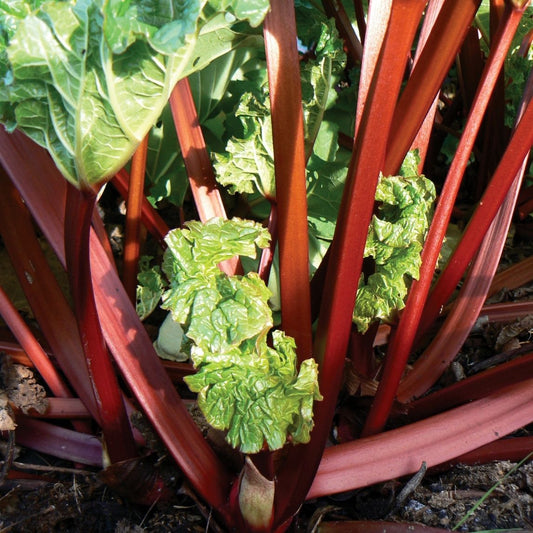
It is a hardy plant, tolerant of little attention but by providing some extra care through watering, an addition of compost, aged manure and blood and bone, they’ll reward you with a more vigorous crop. They are the perfect plant for small space gardens as they grow well in containers and provide some architectural flair to the garden with their bold red coloured stems and large (inedible) leaves. As decorative as its practical, it’s the perfect addition to your kitchen garden.
Varieties
For the home gardener, a couple of plants will usually supply ample produce for the home cook.
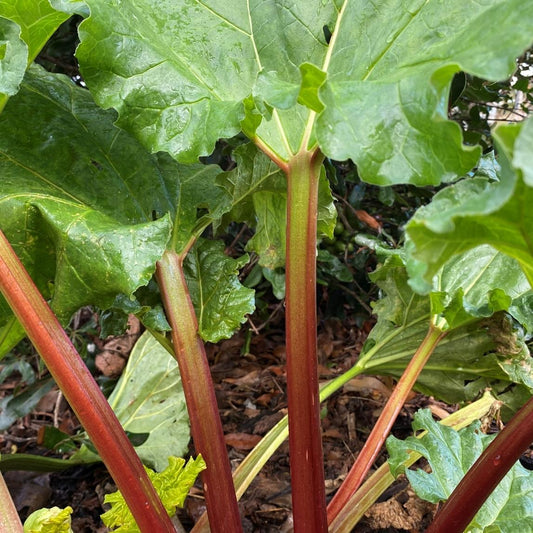
‘Victoria’ is a traditional heirloom variety that is highly productive with greenish-red stems.
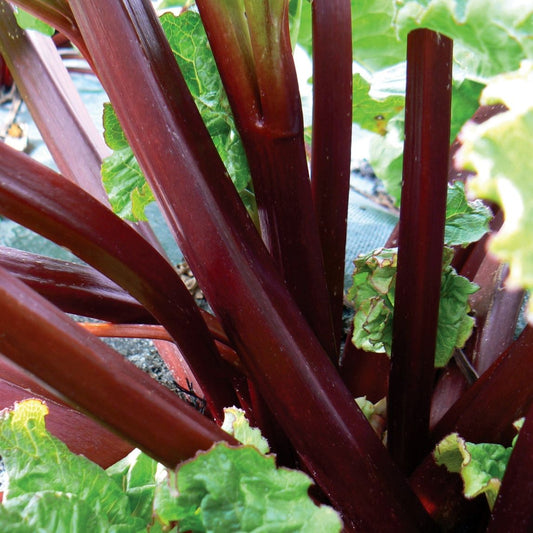
Whilst red stems are the most desirable, the redder the rhubarb does not mean it will be sweeter rhubarb. The deep red stalk varieties may make for brighter dishes and a nicer presentation, but the concentrated colour means a more tart rhubarb. The older, more traditional variety of green stalks are more mellow in flavour.
Cultivation
Plant out rhubarb crowns in winter making sure that the root system is well spread out, and the crown sits just below the soil surface. By feeding your soils prior and an application of mulch post planting you can then sit back and wait… it’s important not to harvest any stems the first year so that the crown can develop. By the second year, you’ll be harvesting a bumper crop!.
How to Plant Rhubarb Crowns
- Dig in some compost, aged manure and blood and bone just prior to planting. Rhubarb is a long-lived crop so this is your chance to improve and feed your soils.
- Dig a hole about 30cm deep and backfill so that the rhubarb crown is just below soil level. Place the crown on the mound to check the correct height. The shape of the crown is individual and will set your orientation.
- Backfill and firm down soil around the crown. Do not overwater. The crown will receive adequate moisture from the surrounding soil and should not be wet while dormant.
- Mulch, leaving the top of the crown clear to develop and grow. As long as the soil is well drained, the crowns will survive even hard freezes with a layer of mulch. Placing a stake in position will help you avoid accidentally digging up your crown before leaves emerge in spring.
Sun: Sun/Part Sun
Pollination: Wind
Ease of Germination: Medium
Crowns or seed?: Most people grow their rhubarb plant from a ‘crown’, which is the part of the plant under the ground and consists of a rhizome and a bud. However, rhubarb can also be grown from seed. Rhubarb grown from seed will take longer. Growing from a crown gives you a good head start.
Germination Temperature: 10-20°C
Spacing: 1 m
Harvest: 360 days
Yield: 1.2 kg/m
Maintenance and Additional Care
Harvesting: In the second year of a rhubarb plant’s growth, some stems can be pulled (not cut), never taking more than half the total stems. When harvesting rhubarb, it’s important to rip the stem from the plant. Grasp each stem near the base and jerk quickly to the side in a slightly downward motion for a clean break to keep the heal intact. Do not cut with secateurs or a knife as this only leads to poor hygiene and won’t trigger the plant to produce more stems. Ripping outer stems from the plant, encourages it to grow more. When the leaf is fully expanded, it’s a tell-tale sign to harvest the tastiest rhubarb stems.
A clever trick to ‘force’ rhubarb to produce stems in early spring is to place a box or barrel (open at both ends) over the crown. The barrel can be surrounded by fresh manure to heat the soil and stimulate grown. The taller the box or barrel, the longer the stems will be.
Companion Planting
Good companions: brassicas, onion, garlic, turnip
Bad companions: melons, pumpkins, tomatoes, cucumbers
Pests and Diseases
Fortunately, pests aren’t greatly attracted to rhubarb so it remains relatively pest and disease free in Australia.
By leaving some space around your rhubarb, you can provide adequate air flow to prevent Downy mildew, a fungal disease that can cause large dead patches on the foliage. This disease is spread with high humidity. This problem can be simply controlled by removing the infected stems. Snails and slugs can be an issue and can be controlled by using sulphur pellets or beer traps.
As with all plants, the best remedy to keeping a plant pest and disease free is to ensure its healthy by growing in the right conditions, in nutrient- rich soils with adequate sunlight and water.
Growing in Containers
Rhubarb is the perfect container grown plant as they produce well and with their colourful stems and large, bold leaves look fabulous as an ornamental. Use a good quality potting mix and continually top up with compost and aged manure for continual grown. Mulching in summer insulate the roots and retains moisture.
Tips and Tricks for Success
Water: Rhubarbs are thirsty but don’t like wet feet. Water them regularly over the warmer months and ensure that the soil is free draining.
Weeding: Weeding helps to keep the rhubarb healthy and productive, avoiding competition for space, light, nutrients and water. Mulching will help to supress weeds and retain soil moisture.
Soil preparation: Good soil preparation is essential to produce a healthy and abundant cop. Annual applications of well-rotted compost and aged manures is ideal. Dig through manure, compost and blood and bone prior to planting. An application of lime is also useful for those with very acidic soils.
Dividing the crowns: After five of six years, you may want to consider dividing your plant. Once they grow larger, they can be overcrowded. Splitting your plant, helps it to focus its growth, becoming stronger and healthier with the bonus of providing you with more plants!.
You can split your rhubarb plant by removing the crown from the ground in winter. Using a spade, cut the crown into smaller sections, ensuring each section has a growing bud. Then re-plant each section into the prepared soil, with enough space between each plant.
Medical history: Rheum x hybridum originated from Asia and has been used widely in Chinese medicine for thousands of years. The dried-out root is used in various ways and is said to have a positive and balancing effect on the digestive system. Its usefulness is wide-ranging and applies to many treatments from a laxative to being used as a tonic for cold sores.
Culinary Uses: Beware! the leaves of rhubarb are inedible, even dangerous, as they contain large amounts of oxalic acid, discard the leaves and eat only the stems. Rhubarb must be cooked, and combines well with apple, cinnamon, orange, berries and pears. If there is a surplus amount more than you need, you can chop and freeze rhubarb. Rhubarb can be used to make jams, pies, crumbles, salads and even flavouring gin – a perfect unwind on a hot summers evening!
Fun fact: Rhubarb was called “Rhabarbarum” by the Romans, after the manners of the Siberian barbarians who grew it!!
Shop our Rhubarb range here
More in Learn

Meet our rhubarb grower
The history and geniality of what we grow is imperative to our mission of preserving heirlooms, so it's no surprise that our rhubarb crowns have a long rich...


Featured Products
Member
$15.16
Retail
$18.95
Member
$15.16
Retail
$18.95
Member
$4.17
Retail
$5.95