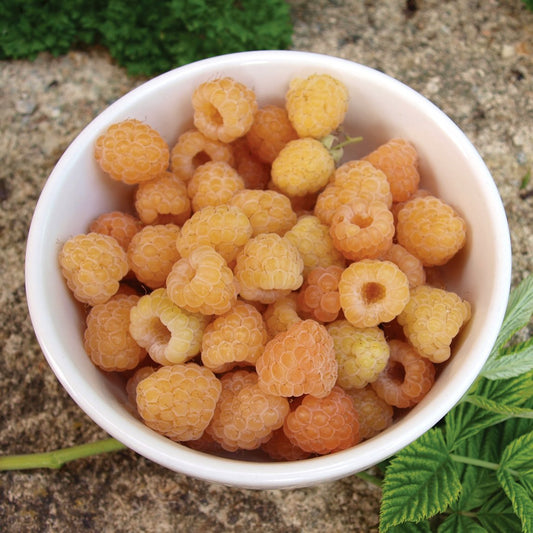
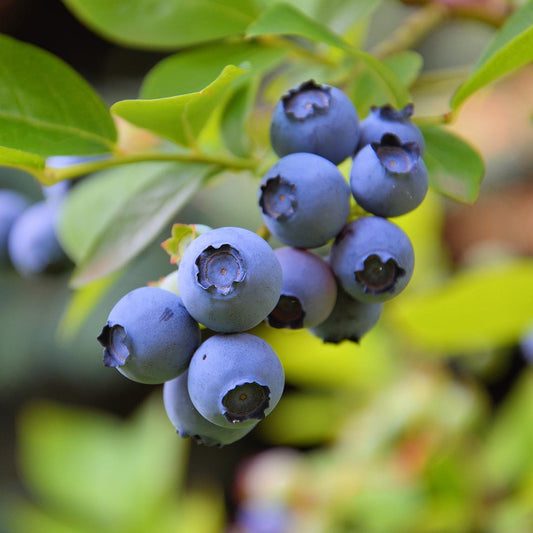
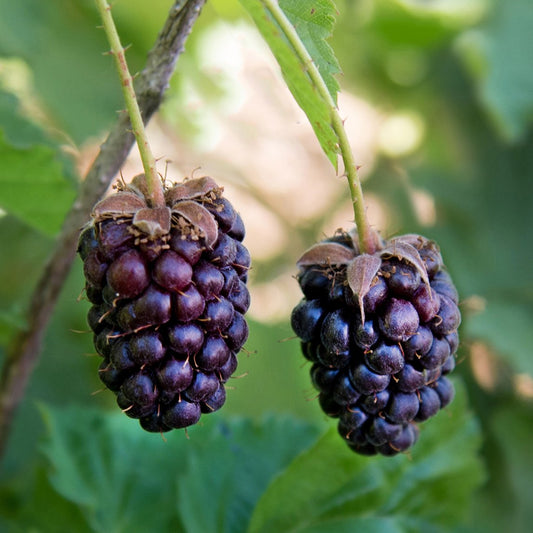
Have you ever tried to pick fruit from an overgrown and untrained raspberry or blackberry plant?
What little fruit you do get is often hard to access, so invariably you end up with thorns stuck in your arms and scratches all over yourself. This makes picking the fruit a chore because it hurts and you don’t get much! The correct training and pruning of your canes will make the harvesting easier and you will get to enjoy 4-5 times the amount of fruit that you would otherwise get.
The key to managing your canes is an understanding how canes fruits grow, flower and produce fruit, once you have a basic grasp of this then you can manage your plants easily and with little effort. Here we look at both Raspberries and Brambleberries, both commonly known as cane fruits.
Raspberries
Raspberries should be planted in single rows at 30cm spacings and with two sets of parallel wires to tie them into, at 90cm and 1.8m high.
Over many years of observation, raspberry growers have determined that some cultivars flower and fruit on new canes, while others set their flowers and fruit from canes that grew in the previous summer. This difference forms the basis of two distinct systems that are employed in managing raspberry canes.
The two systems are known as Autumn Cropping and Summer Cropping. The first step is to know which cultivar you have and which category it fits into.
Autumn Cropping
(Fig. 1) cultivars include ‘Autumn Bliss’, ‘Heritage’ and ‘Bogong’ and are known as ‘Primocane’ cultivars because they flower and fruit from a single seasons growth. Because this growth happens entirely from the ground in one season, it typically takes until the late summer months to produce flowers and fruit – hence the ‘autumn’ cropping classification.
These cultivars are better suited to warmer coastal areas as they require less chilling to produce new canes. They are the easiest to manage as you simply remove all spent canes in the winter and start the cycle again.
Summer Cropping
(Fig. 2) cultivars such as ‘Pink Neika’, ‘Chilliwack’, ‘Tayberry’ and ‘Purple Raspberry’ are also known as ‘Floricane’ cultivars as they bear flowers and fruit on short new canes that arise from mature canes left to over-winter from the previous year.
With the head-start afforded by the over-wintered canes, these cultivars produce flowers and fruit early in the season, sometimes in the spring, but usually in the first half of summer. These are the cultivars you want to plant if you want make a summer berry pudding for Christmas.
The training technique involves identifying new canes emerging from the ground in the spring/summer and training these onto the trellis to over-winter and removing the spent fruiting canes all the way to the ground mid-season to allow the new canes coming through to fully develop and bear the crop for the following summer.
Dual Cropping
cultivars – as with many things in the natural world, there are those individuals that don’t like to conform to the rules.
With raspberries these are the Dual Cropping cultivars which can produce two (smaller) crops in a single season by fruiting on both primocanes and floricanes.
These cultivars include ‘Diggers Gold’, ‘Lloyd George’, ‘Willamette’ and ‘Sandford’. With these it is best to pick one of the two training regimes and stick to it.
Deciding on which is up to you; if you want Christmas berries, then use the Summer Cropping system, if you have a glut in summer with all your other berries, then adopt the Autumn Fruiting system to delay your harvest.


Brambleberries
The Brambles include cultivars such as ‘Youngberry’, ‘Loganberry’, ‘Marionberry’ and the cultivated
blackberries such as ‘Chester’ and the thornless ‘Waldo’.
The same type of trellis as employed for raspberries should be used for the brambles, with the addition of a third wire to cope with the extra growth.
Brambles are much more vigorous than raspberries, so the main difference is the spacing along the row with a minimum of two metres between plants.
In essence the Summer Cropping technique employed for raspberries is also used for the brambles.
The current seasons growth is tied in over the summer whilst the spent canes are removed after the fruit is harvested, they just produce a lot more growth in a season, so the canes that are tied in to over-winter need more support and some creative training to control them.
By weaving the canes on the support trellis you can control canes that can be up to 10m long, think of the weaving pattern like the ABC logo that loops back on itself (Fig. 3).
Remember, if you muck it up, or you are wanting to control an already unwieldy plant, just chop the whole lot off in the winter and begin the process as if you had just planted out your canes. With an established root-system they will respond quickly and you will soon be back in control.