This does not mean that those who wish to plant some natives around them shouldn't but that they can widen their choices because there are far more plants that have adapted to dry, hot conditions from outside Australia than from within our coastline.
Our climate demands that we keep our thin soils covered to prevent topsoil loss. It is therefore logical to opt for permanent plantings, not broad expanses of annual bedding plants that devour water resources, need constant weeding and after a brief gaudy display leave soils exposed. Evergreen perennials hold their foliage for twelve months.
Evergreens that tolerate dry conditions are the obvious choices. They suppress weeds and, apart from the occasional clip over and mulch, need hardly any maintenance.
They are plants that revel in harsh conditions so they are less likely to be prone to pests and diseases.
There is a huge range of plants that can fit both our climate and our new mind-set; we need to look at them with new eyes. They can be moulded into a living sculpture where there is both drama and peace – even without flowers. Foliage, form and texture should be the focus. The repetition of a simple rounded shape can be dramatic when contrasted with some strong verticals in formal gardens.
Whatever your style, start to think of shapes first rather than flowers. Imagine different sizes of rounded shapes set off by a strong vertical, add some spiky or strong upright plants, blend some low tufts and contrast with some flat mat shaped plants. Don’t be seduced by visions of brilliant flowers.
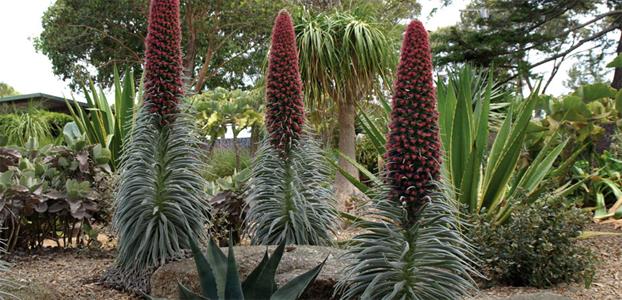
VERTICAL FORM - ECHIUM
The next consideration is foliage texture and colour. Consider the difference between ballota, Euphorbia wulfenii, rosemary and lavender. Yes, they are all roughly the same rounded shape and size, yet their colours range from rich dark green to silver and smoky grey.
Blue chalk sticks and Hen and chickens may both be the same shape (mat forming) and the same colour (silver-grey) but their textures are quite different.
Chalk sticks are a mass of vertical foliage, whereas Hen and chickens is a conglomerate of crisp rosettes. By combining and contrasting foliage colour and texture we can start to use plants as pieces that will make up a many textured and coloured sculpture.
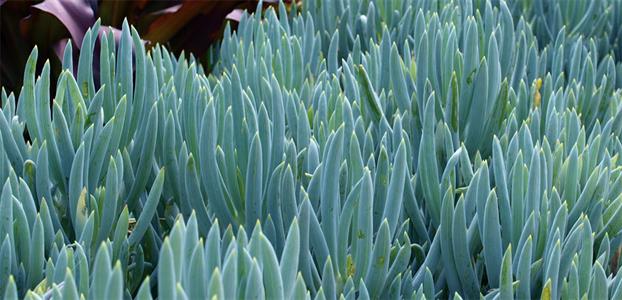
MAT FORM - CHALK STICKS
Plants of predominantly vertical shapes, be they hollyhocks at the small end of the scale, or pencil pines and lombardy poplars at the large end, always look most effective on sloping ground because they accentuate the slope. So whether you have a garden the size of a hillside in the Mediterranean or a sloping backyard in Australia, strong vertical shapes are ideal.
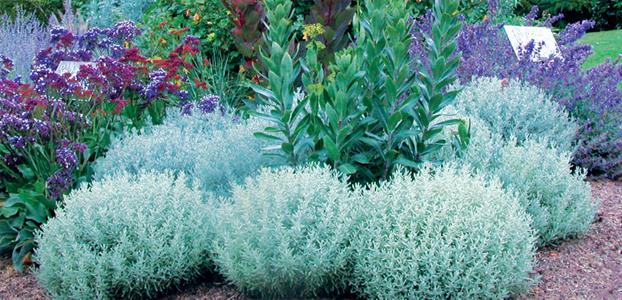
MOUNDING FORM - BOX
However using too many strong verticals can give a hectic and hemmed impression, rather than an uplifting one – like salt, they should be used sparingly. Conversely a preponderance of rounded shapes often seen in suburban gardens will make the garden feel heavy; like too much boring bland pasta, an unappealing stodgy mass.
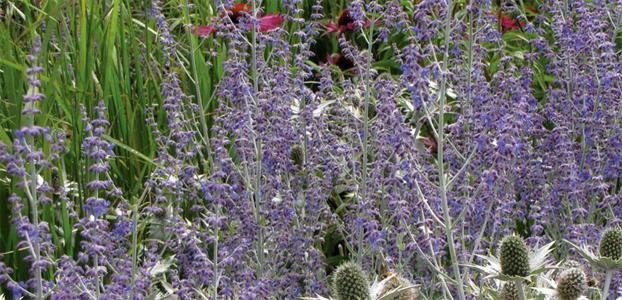
AIRY FAIRY FORM - RUSSIAN SAGE
Plants with no particular shape can blend the hard edges of strongly formed plants. These ‘airy fairies’ lend that touch of romance that no garden should be without. These ‘pretties’ produce airy heads of flower for months. Again they should be used with restraint as too many will feel like a formless mass of over sweet pudding.