Returning to a Wilder Garden

How returning to nature affects our gardening tastes.

Returning to a Wilder Garden

In the garden world styles ebb and flow. After a long period where clipping and hard structures have dominated there is now a return to the wild.

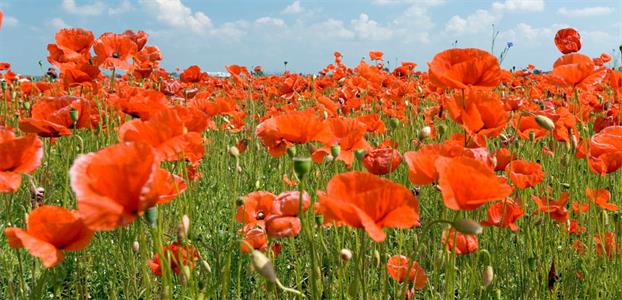
FIELDS OF FLANDERS POPPIES

FIELDS OF FLANDERS POPPIES

Now it is about more than the look of the garden; it is a fundamental shift to put gardens more in tune with nature and ecology. This new perennial or natural garden movement is distinct from revegetation projects whose primary aim is to restore former ecosystems.

Natural planting acknowledges that most urban areas have been so changed they can never return to their original state. They also are concerned with aesthetics and plantings that are designed in terms of form, colour and seasonal interest.

In creating the planting design for the Highline, an aerial park on a former railway viaduct in New York, Piet Oudolf turned to the weed communities that naturalised the track when the trains stopped running for inspiration.

Closer to home Diggers’ own Evette Jungwirth teamed with the City of Melbourne to transform a boring turf monoculture at Birrarung Marr into a vibrant summer meadow. Nature and the garden can be poles apart. Let’s look at how you might bridge the gap between the wild and your path, by creating a wildflower meadow.

How do we bridge the gap?

  • Be inspired by a “wild” place. The Prairies of North America have inspired much of the new perennial movement. It is the native home of the likes of Echinacea, Rudbeckia, Liatris etc. Closer to home, the annual display of WA wildflowers inspired Diggers’ Waltzing Matilda mix.
  • See the plants in your garden as a community, not isolated individuals. Let your plants support each other.
  • Make the most of what your site gives you. Low nutrient soils suit a whole range of spectacular plants. Keeping nutrients low also inhibits bullying weeds. Likewise for water, select plants adapted to your local rainfall.
  • Cover the ground with plantings. Nature abhors a vacuum and here mulch doesn’t really count. Pack plants in with shoe horns.
  • Layer them. Any square metre should include plant forms that vary in height, root depth and spread. Sure these plants can compete, but they also support one another and virtually eliminate openings for opportunistic weeds. A natural garden is managed rather than maintained.
  • Loosen your grip on the reins and to an extent let your plants take you where they want to go. James Golden, whose garden Federal Twist is a Dr Seuss version of a prairie, embraces mess: “My garden process is a series of interventions to control mess, refine line and legibility, and sculpt mass from mess.”

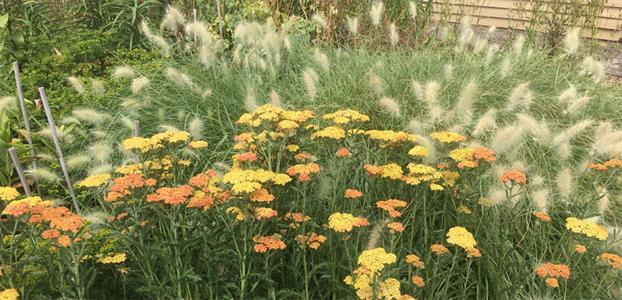
PERENNIALS AND GRASSES WORK AS A FIRST STEP

PERENNIALS AND GRASSES WORK AS A FIRST STEP

Annual Meadows

Annual wildflower mixes are a great introduction to wild gardening. Results are near instant and much of the “design” has been prefabbed in the ratio of the seed mix.

The main thing to understand about annual wildflowers is they are opportunists that arise to heal disturbed sites after fire, digging or drought. They need soil preparation to succeed. You cannot just don a diaphanous gown and, like Botticelli’s Flora, sashay with your sachet, flinging seed hither and thither across your Kikuyu ridden lawn and expect success.

Before the widespread use of herbicides, European corn fields were semi-wild landscapes of annual wildflowers among the Wheat and Barley.

Farmers’ despair, gardeners’ delight. What you as a gardener need to do is mimic the farmers of old and plough that field or at least dig over your patch. Let competing weeds germinate then dig again. A packet of Diggers Cornfield mix of Barley, Cornflower Poppies reflects the iconic “Flanders field.” Sow the seed in late autumn with the local farmers who have an eye for the opening rains; or after the last frost at the end of winter. Planting in rows allows control of some of the more aggressive grassy weeds but please squiggle your rows to keep the natural feel.

Some tufting grassy weeds are OK but show no mercy to running grasses like Kikuyu. In an organic garden this means thorough removal.

Our meadow flowers from spring to early summer but by February, without additional irrigation, it is time for it to be brush cut. It is then mown and rested before preparation and resowing in autumn.

In the 3 years the meadow has been trialled we have added a matrix of perennial plants such as Meadow Sage, Iris and Agastache as well as biennials like Foxglove and Hollyhock, these have a sense of permanence.
Perennial Meadows

The perennial meadow is a step beyond. While the annual meadow needs renewing each season, planting a perennial meadow is a long term proposition.

It offers the progression through time. It is also far more challenging. The key to getting a natural looking perennial meadow is to establish a matrix of structural plants that carry the planting. The rough rule is 70 percent structural plants to 20 showy fillers. With a meadow this is naturally made up of grasses.

At Heronswood we chose to trial a selection of Australian native grasses: kangaroo, wallaby and spear grass as well as Miscanthus adagio and Stipa gigantea.

Amongst the grasses we planted some quick growing perennials. Some were planted in narrow drifts between the grasses: Scabiosa 'Midnight', Sanguisorba and Verberna bonariensis.

Planting in drifts creates a transparency in the planting that helps unify the scheme. At the front we block planted Achillea Terracotta. This block planting was harder to pull off as natural looking. In hindsight we should have woven it through the planting to make a seamless whole.

Winter will bring a mass cut down of this section of the garden and a re-tweak, I think we'll add some pockets of annuals for seasonal interest and de-block our Achillea. From then on it is all about observation and tuning.

So why don’t you bring a bit of wildness to your neighbourhood. While writing this I have been glancing at the news. Making a wildflower meadow can be as much a cultural as it is an ecological statement. It says "I am for diversity, community and inclusion. Working with, not trying to control".

Go wild! Make a stand with your wildflowers! It will take about 4 years to get it right, so no need to watch the news till the next president.

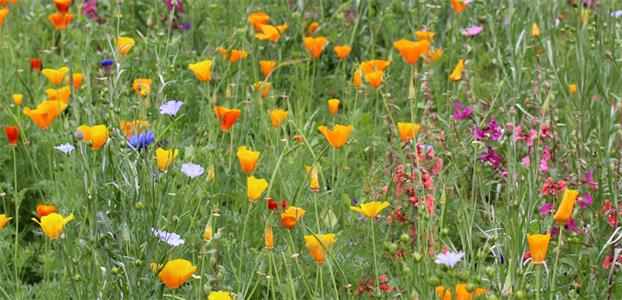
WILDFLOWERS IN HERONSWOOD'S VALLEY

WILDFLOWERS IN HERONSWOOD'S VALLEY