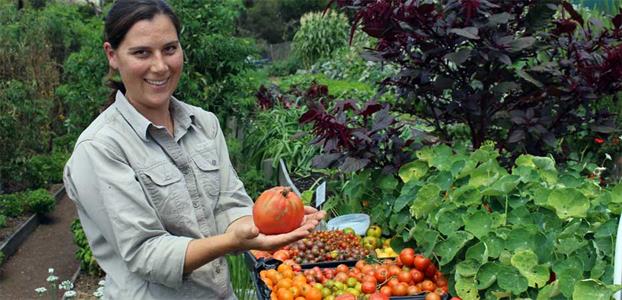
For us gardeners, this means we need to observe strict guidelines which are annually audited to maintain this accreditation.
areas of the garden are covered in this certification including food production and ornamental flower beds.
That all sounds a bit daunting and official but really it comes down to home grown common sense!
The fundamental key to organic gardening is the building of healthy living soils. Just as we are starting to realise that gut health is imperative to personal well being and immunity in humans, so too is soil health the building block of a healthy productive garden.
The differences between modern, conventional gardening and that of organic gardening practices can begin to be explained by comparing the action of chemical fertilisers with organic composts. Mineral fertilisers are chemical based additives and are designed to feed plants, not the soil. They release nutrients very quickly so gardeners see rapid results but over time this can lead to a build up of salts and chemical residues that can be harmful to soil life.
Composts, on the other hand, enrich and condition soils.
They provide plants with nutrients via the addition of a medium that is jam packed with beneficial microbes and fungi. These life forms incorporate themselves in the soil and form an association with the plants roots to enable the uptake of nutrients.
In conventional gardening practice, pests, diseases and weeds are largely controlled by the use of poisons.
By contrast, an organic garden employs a clever use of strategic planning, such as attracting beneficial insects to feast on bad bugs or non-toxic inputs such as flame weeders to deliver the same results; all of which respect the soils and the life within them.
Each day at Heronswood, we adopt organic practices to keep the gardens in optimum health.
Integral to our daily work is the making of compost. Admittedly sometimes it is far from text book compost but the inclusion of this bio active mulch/compost enlivens the soils and reduces our reliance on chemical based, nutrient inputs.
In areas where aesthetics aren’t such a priority we ‘chop and drop’ prunings around the plants. This provides a wonderful mulch which in turn delivers nutrition to the soil, increases the organic matter and improves the soils water holding capacity.