
How to Grow Beetroot
Beetroot is an understated vegetable with ample potential in the garden.

Botanical Name: Beta vulgaris
Plant Type: Hardy biennial
Beetroot is an understated vegetable with ample potential in the garden. Not only do they have delectable roots in a variety of colours, but they also produce tasty leaves suitable salads or cooking like spinach. A native of the European seashore, Beta vulgaris was grown and selected for different characteristics – one for a leaf crop (known as silver beet), another for its edible roots (Beetroot), and another, as stock feed (Mangelwurzel). A seaside native, beetroot is tolerant of salty conditions, but prefers a rich soil with excellent drainage and a pH of 6.5-7.0. A clustered seed, thinning is essential for good root development, but don’t waste those plants, they can be used in salads and stir fries.
Grown since the 16th century, beetroot comes in many different shapes, sizes, and colours, all of which bring something special to your garden and table.
Varieties
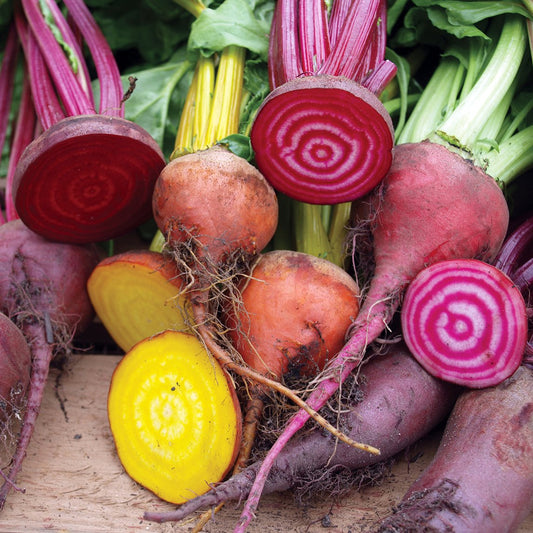
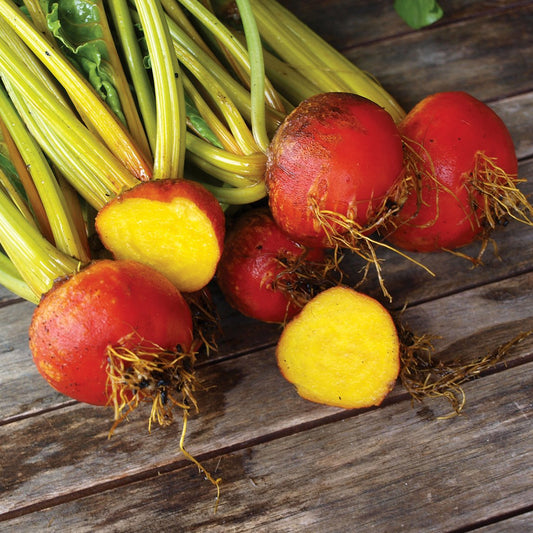
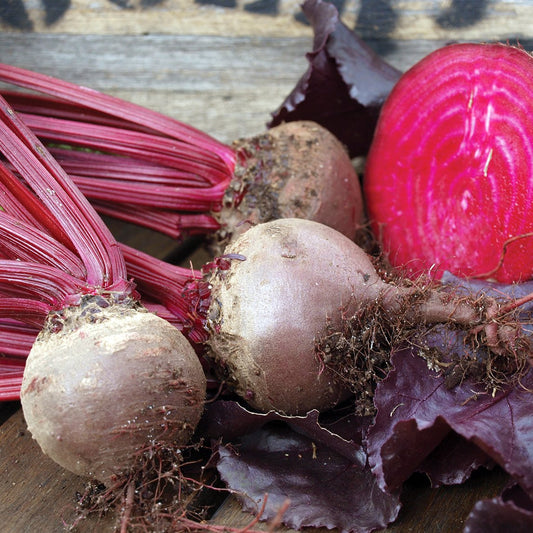
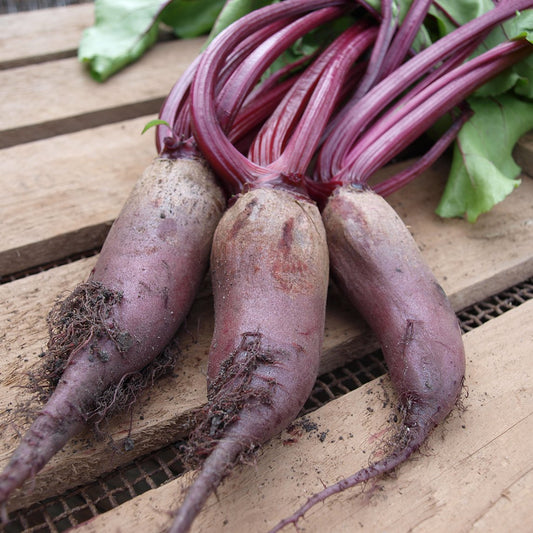
There is a range of varieties of beetroot available, which differ in growth rate, flavour, colour and maximum size. A rough rule of thumb is that slower growing varieties tend to be sweeter and better flavoured. Beetroots may be round, cylindrical, or somewhere in between and come in a range of colours from red through to pink, yellow and even pure white! Sugarbeet, was traditionally grown for its high sugar content, making it suitable for desserts!
Growing From Seed
Sow: Direct in rows directly into prepared garden beds. Ensure that the ground is enriched with compost and weed-free
Ease of Germination: Easy
Germination Temperature: 5°C–20°C
Germination Time: 14-20 days
Spacing: 10cm apart
Harvest: 55-140 days
Yield: 24-760gms each
Plants can be established either by direct sowing or can be transplanted, the latter being the method of choice if weed control is a problem. The seed will germinate at low temperatures but preferably should be germinated at around 20°C.
Beetroot seed is actually a clustered, dried fruit, so beets always need thinning, to allow adequate spacing for the 2-4 beets in each cluster. These seedlings can be readily transplanted or even eaten as a shoot in salads. Transplant at 10cm spacings to allow adequate room for root development.
Beets can be established during spring, summer, or autumn in temperate and cool regions, though plants established early will reach a greater size and be productive for a longer period than those established late.
Cultivation
Beets are very hardy, frost-tolerant plants that will grow in almost any conditions, including partial shade. Sow successively to extend your season and harvest.
Sun: Full Sun – Part Shade
Pollination: Cross pollination via wind and insects
Soil: Beetroot prefer a rich soil with high concentrations of nitrogen. Ideally, beds should be prepared with plenty of well-decomposed manure and hilled up to facilitate drainage. Soil pH should be neutral to slightly alkaline, and if acidic conditions are present, beds should be treated with lime or dolomite. Water regularly to keep soil moist, but not wet, otherwise the tubers may dry out or even crack.
Maintenance and Additional Care
Soil moisture consistency is important. Too much water can stimulate extra leaf growth at the expense of the root, while a lack of water causes roots to become woody and split. Mulch will help to maintain soil moisture as well as reduce competition from weeds.
If plants grow out of the soil, don’t panic, they will still taste great – you may just need to peel this portion!
Pests and Diseases
Beetroot are relatively pest free. Make sure you thin seedlings as if overcrowded when young they may dampen-off.
The development of non-uniform colour together with woodiness can occur due to erratic watering. Excessively high soil pH or manganese deficiency can also cause poor root development. All of these problems can be prevented by good soil preparation, provision of trace elements in complete fertilisers, mulching and regular watering.
Companion Planting
Good companions: Bush beans, cabbage, kohlrabi, lettuce, onion, radish and silverbeet.
Bad companions: Climbing plants and mustards.
Tips and Tricks for Success
- thin the seedlings when they germinate- these thinnings can be used in salads and stir fries
- when harvesting leave some of the stalk- this makes it easier to handle but doesn’t damage the delicate skin
- remember that the leaves can be used in salads, stir fries or steaming
- in cold climates, plants should be established in spring, so that they can build nutrient stores in their roots to survive the stress of cold winters. In areas with mild winters, avoid establishing plants in autumn because the combination of short-day length and mild conditions can induce plants to run to seed prematurely.
- sow seed successively to extend your season. Sow in 3–4-week intervals, or as required.
Container Growing
Globe and mini-gourmet varieties of beetroot are suitable for growing in containers. Always use a premium potting mix when growing in containers. Water regularly to maintain adequate soil moisture.
Harvesting
Beetroot can be harvested at virtually any size depending on your preference, with baby beets harvested at the earliest stage - around 50-60 days. Do not be in a hurry to harvest all of your beets in autumn, because it is generally acknowledged that beets harvested after the first frost are the sweetest crop for the season. Most beets are best harvested when they are just larger than golf-ball size. Leaves can be harvested as required, always leaving at least two-thirds of the foliage on the beet to provide much needed energy for the developing root.
Seed saving
Seed longevity: 5-6 years
Isolation distance: 250m – 1.6km
How To Save Seed: Beetroot must be subjected to 10 weeks below 4° to set viable seed (or fruit). A biennial crop, beetroot will set seed in the second year, at which time the root will become inedible. Seed is produced in summer. Harvest individual seed balls as produced or
pick the entire stalk and hang upside-down to dry over a bucket before stripping seed. Store in a seed saving envelope in a dry, cool, dark place.
More in Learn

How to Grow Cabbage
Cabbage is not only one of the best yielding leaf crops there is, but cabbage also has the best storage life of any leaf crop.

How to Grow Lettuce
Grow as many different varieties as possible to experience the range of leaf shapes, colours, textures and subtlety of flavours across this immense range of heirlooms.

How to Grow Carrot
Not just great for your eyesight and rabbits, carrots are actually an ancient crop which has seen great change over the years.

How to Grow Beans
Beans perform best in warm, sunny positions and do well in most soils, provided there is an ample and constant supply of moisture.
Featured Products
Member
$5.56
Retail
$6.95
Member
$5.56
Retail
$6.95
Member
$4.17
Retail
$5.95