
Cosmos
Cosmos is an indispensable, easy to grow, tender annual flower and their beauty belies their tenacity.

Native to North, Central and South America, it is said that Spanish priests grew Cosmos in their mission gardens in Mexico. Their evenly placed petals led them to be christened Cosmos after the Greek word meaning harmony and order.
They belongs to the Family Compositae which is a classification based on their Daisy like flower structure. There are more than 20 species of Cosmos including atrosanquineus, bipinnatus and sulphureus . Cosmos sulphureus and Cosmos bipinnatus are most familiar to home gardeners. These two species are most easily differentiated by leaf structure and flower colour.
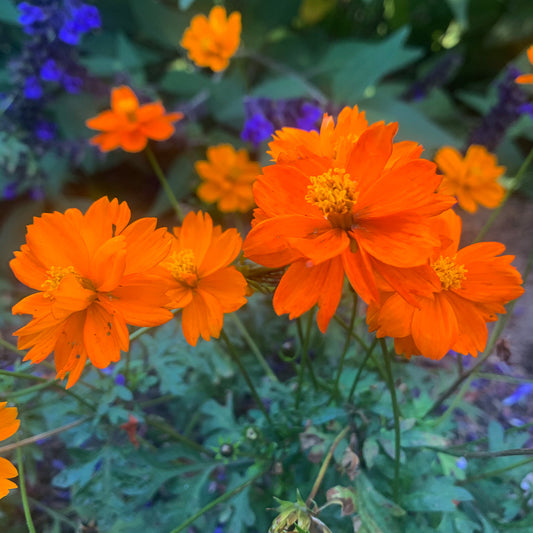
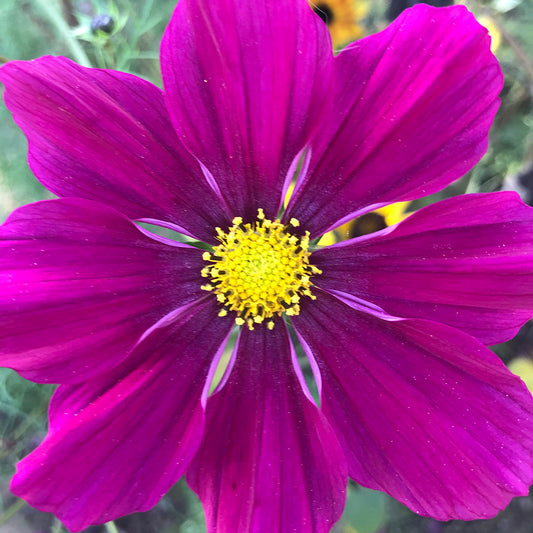
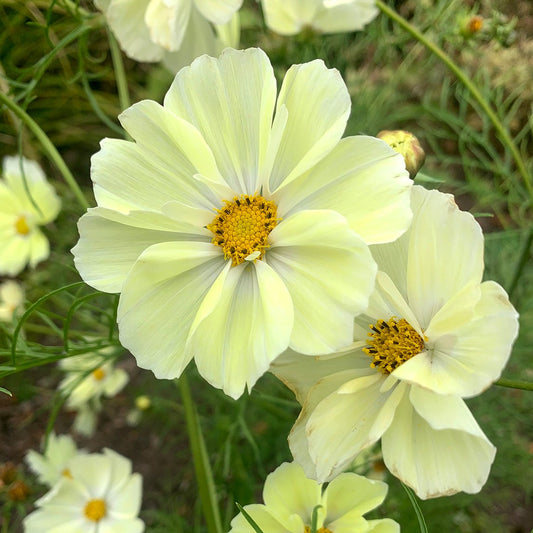
The mid green leaves of C. sulphureus are long, with narrow lobes and hairy margins. The flower colours of this species are always shades of yellow, orange or red. The C. bipinnatus has mid green leaves that are finely divided and look similar to ferns. The flowers are white or various shades of pink to dark rose.
Cosmos is an indispensable, easy to grow, tender annual flower and their beauty belies their tenacity. It adds height and colour in the happiest of ways with its large cheerful flowers that are as unpretentious as they come. The open, saucer-like, flowers and papery petals continue to be produced through the warmer months.
Variations in petal shape, colour and scent occur between cultivars. You may encounter shallowly cup shaped, maroon coloured and chocolate scented blooms (as occur in the atrosanquineus species), flat or rolled, white through to Carmine coloured petals (as occurs within the bipinnatus species) or yellow, through to orangey red as seen in the sulphureus species. There are endless selections available in colours ranging from white, soft pink to magenta, red, chocolate and orange.
Featured Products
Member
$4.17
Retail
$5.95
Member
$4.17
Retail
$5.95
Member
$4.17
Retail
$5.95