
Anemone
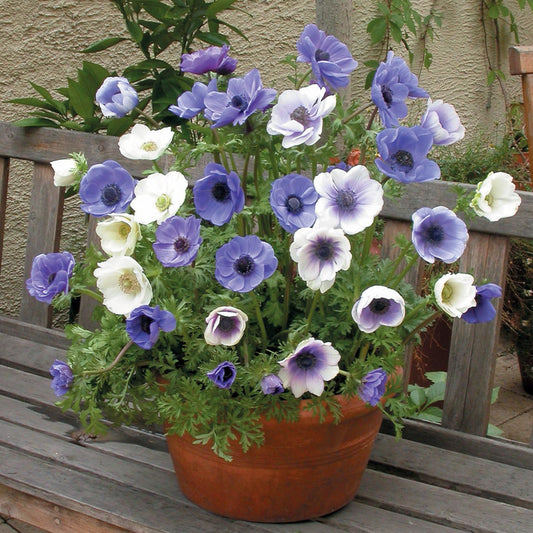
Anemones are beautiful flowers that are eagerly sought for their splendour and hardiness.

Japanese Windflower
This beautiful genus of flowers has derived their popular name, Windflower, from Greek origins, meaning 'Daughter of the wind' and pertains to the dainty flowers' frailty. Early European plant explorers first discovered windflowers in Japan, where they had been imported from their native China and cultivated by gardeners for generations. These beautiful flowers are now eagerly sought for their splendour and hardiness.
Growing Anemones
This autumn, flowering species will thrive in moist dappled shade or full sun provided they are shielded from the hottest sun. They generally grow best in a loamy, well-drained, fertile soil enriched with compost. Given a protected position, they will thrive and spread through the fibrous root runners forming a lush, mounded ground cover. With its shallow, saucer-like flowers, the flower appears in single or double versions, tower high above the foliage, making a showy canopy of colour. Tolerant of coastal conditions, the delicate flower belies the tough and resilient nature of this garden favourite. A popular choice of gardeners for shady embankments, the Anemones can make a difficult site look amazing with a mass planting or drift of soft seasonal colour. Anemones make a perfect companion plant to Hellebores and Hostas in a shady garden setting. Apply a liquid fertilizer in summer just before flowering to encourage strong flower stem growth.
Anemones for cut flowers
If cut flowers are desired, it is best to harvest the flowers early in the morning while still cool outside and while the blooms are still closed. To open your flowers, place in room temperature water out of the direct sun.
Anemone propagation
Propagate by root division or under-ground runners in spring to plant out into prepared beds. Remove spent flower stems after flowering finishes leaving the lower foliage to remain.
Pests and diseases which affect Anemone
Japanese Windflowers are a hardy semi-deciduous perennial with a limited range of pests such as snails and caterpillars that may need control at times. Some issues with powdery mildew or rust can also occur seasonally with mild and humid weather conditions in the warmer months. Avoid major issues with fungal diseases by watering from underneath the foliage. Using a topical application of a fungicide will also help.
Featured Products
Member
$9.07
Retail
$12.95