What I hope to show is the immense value of trees to the biosphere. When we cut forests, we must pay for the end cost in drought, water loss, nutrient loss and salted soils.
Such costs are not charged by uncaring or corrupted governments and deforestation has therefore impoverished whole nations. The process continues with acid rain as a more modern problem, not charged against the cost of electricity or motor vehicles, but with the inevitable account building up so that no nation can pay, in the end, for rehabilitation.
The capitalist, communist and developing worlds will all be equally brought down by forest loss.
Those barren political or religious ideologies which fail to care for forests carry their own destruction as lethal seeds within their fabric.
We should not be deceived by the propaganda that promises for every tree cut down, a tree planted. The exchange of a fifty gram seedling for a forest giant of fifty to twelve hundred tonnes is like the offer of a mouse for an elephant.
A young forest or tree doesn’t behave like the same entity in age; it may be more or less frost hardy, wind fast, salt tolerant, drought resistant or shade tolerant at different ages and seasons. I can never see the forest as an assembly of plant and animal species, but rather as a single body with differing cells, organs and functions.
At the crown of the forest and within its canopy, the vast energies of sunlight, wind and precipitation are being modified for life and growth.
Trees not only build but conserve the soils, shielding them from the impact of raindrops and the wind and sun.
Like all living things, a tree has shed its weight many times over to earth and air, and has built much of the soil it stands in. Not only the crown, but also the roots die and shed their wastes to earth.
The living tree stands in a zone of decomposition, much of it transferred, reborn, transported, or reincarnated into grasses, bacteria, fungus, insect life, birds and mammals.
The root fungi intercede with water, soil and atmosphere to manufacture cell nutrients for the tree, while a myriad of insects carry out summer pruning, decompose the surplus leaves and activate essential soil bacteria for the tree to use for nutrient flow. The rain of insect faeces may be crucial to forest and prairie health.
It is a clever person indeed who can separate the total body of the tree into mineral, plant, animal detritus and life! This separation is for simple minds; the tree can be understood only as its total entity, which like ours, reaches out into all things.
When rain falls on a forest, a complex process begins. First the tree canopy shelters and nullifies the impact of raindrops, reducing the rain to a thin mist below the canopy even in torrential showers. The random fall of rain is converted into well-directed flow patterns that serve the needs of growth in the forest.
If we imagine the visible (above-ground) forest as water (and all but five to ten percent of this mass is water), and then imagine the water contained in soil humus and root material, the forests represent great lakes of actively managed and actively recycled water.
It almost seems as if the purpose of the forests is to give the soil time and the means to hold fresh water on land. Moisture will not condense unless it finds a surface to condense on. Leaves provide this surface, as well as contact cooling.
A single tree such as a giant Til (Ocotea foetens) may present 16 ha of laminate leaf surface to the sea air, and there can be 100 or so such trees per surface hectare; so that trees enormously magnify the available condensation surface. The effects of condensation by trees can be quickly destroyed. Felling of the forests causes rivers to dry up and drought to grip the land. All this can occur within the lifetime of a person.
Within a thousand metres, the air entering the forest, with its tonnages of water and dust, is brought to a standstill. The forest swallows these great energies.
If dry hot air enters the forest, it is shaded, cooled, de-humidified and slowly released via the crowns of the trees. We may see this warm humid air as misty spirals ascending from the forest.
The trees modify extremes of heat and humidity to a life-enhancing and tolerable level.
The winds deflected over the forest produce an effect extending to twenty times the tree height, so that a 12 metre high line of trees compresses the air to 244 metres above, thus creating more water vapour per unit volume, and also cooling the ascending air stream. Both conditions are conducive to rain.
Forests are cloud-makers both from water evaporated from the leaves by day and water transpired as part of life processes. Forested areas return ten times as much moisture as bare ground, and twice as much as grasslands. This is a crucial finding that adds even more data to the relationship between desertification and deforestation.
Design strategies are obvious and urgent — save all forest that remains and plant trees for increased condensation on the hills that face the sea.
All these factors are clear enough for any person to understand. To doubt the connexion between forests and the water cycle is to doubt that milk flows from the breast of the mother, which is the analogy given to water by tribal peoples. Trees were the “hair of the earth” which caught the mists and made the rivers flow.
If we could only understand what a tree does for us, how beneficial it is to life on Earth, we will (as many tribes have done) revere all trees as sisters and brothers. I hope to show that the little we do know has this ultimate meaning; without trees, we cannot inhabit the Earth.
Without trees we rapidly create deserts and drought, and the evidence for this is before our eyes. Without trees, the atmosphere will alter its composition, and life support systems will fail.
This extract is from Permaculture: A Designer's Manual, copyright Bill Mollison and reprinted courtesy of Tagari Publications.
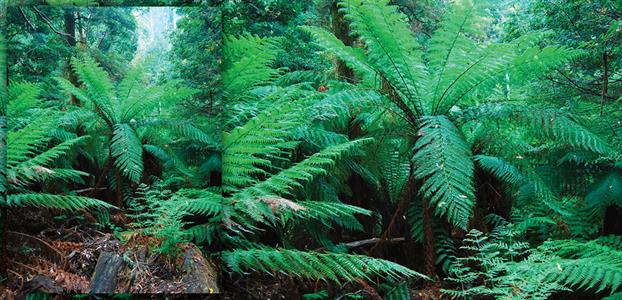
RAIN IS CONVERTED FROM LARGE DROPLETS TO MIST

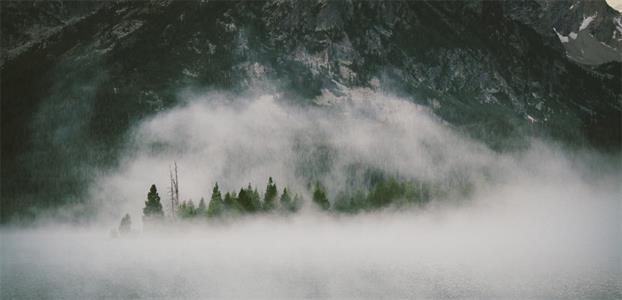
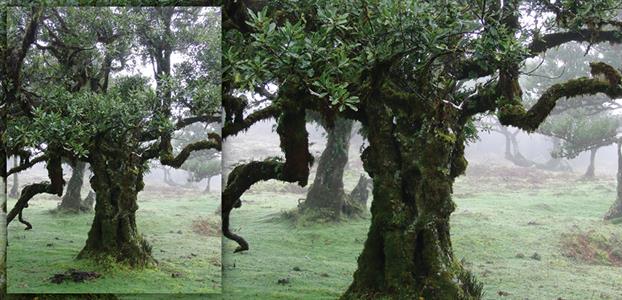
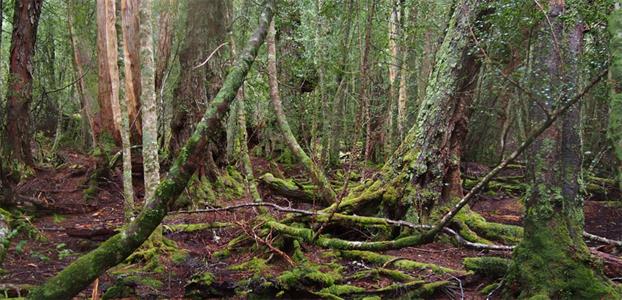 OLD GROWTH FORESTS ARE THE CRUCIAL PLATFORM FOR BIODIVERSITY