Soil microbes, fungi and invertebrates are critical in turning simple sand, silt and clay into what we know as soil. They form the soil food web, a hierarchical network of consumers and converters, which starts with microscopic bacteria and ends with spiders, slaters and earwigs.
Fungi are one particularly fascinating and diverse resident of the soil. While mushrooms (the reproductive parts) appear only occasionally when conditions are right, fungal threads beneath the soil surface are constantly breaking down and recycling nutrients. But they don’t just feed on dead plant matter: some are parasitic, feeding on living wood, while a third type is symbiotic.
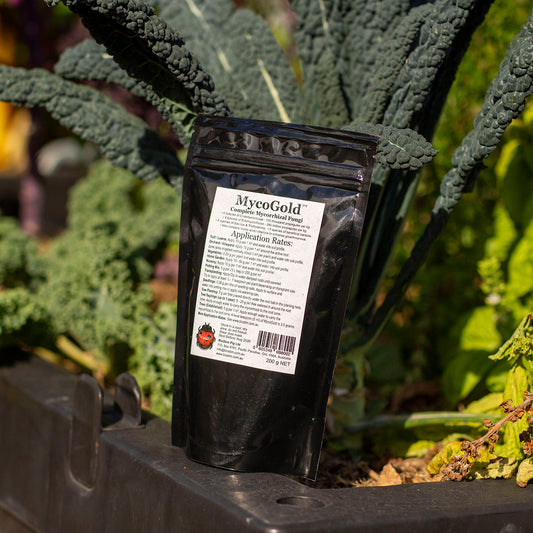
These are known as Mycorrhizae and they form living partnerships with plants, especially woody shrubs and trees. Most truffles fall into this category, which is why they are usually gathered from healthy forest ecosystems, and cannot easily be cultivated. Mycorrhizae donate water and nutrients from the soil in exchange for the B-vitamins and carbohydrates that the plants produce during photosynthesis.
Their long underground filaments (known as hyphae) actually intrude into plant roots to form nutrient exchange sites, and they extend outwards for tens or hundreds of meters, multiplying the effective root zone of the plant by many times (see image below). Because the mycorrhizae are extracting a steady supply of carbohydrates from the plant and depositing them in the soil, they are thought to play a critical role in carbon sequestration.

A diverse range of bacteria also perform important decomposition and nutrient supply roles. Some produce polysaccharide gums which act like glue to create that lovely crumb structure gardeners aim for.
Others actually have an electrostatic charge which also helps bind the soil particles together, while yet different kinds are the nitrogen fixers that form a symbiotic relationship with legumes to fix atmospheric nitrogen into the root system, enriching the soil.
Bigger critters are important too – protozoa and nematodes (a type of non-segmented microscopic worm) consume bacteria and fungi, and in turn are food for arthropods and larger nematodes.
Most nematodes, by the way, are beneficial – only a handful are plant parasites. These, along with protozoa, are important in converting minerals and nutrients into a plant-accessible form, while arthropods like earwigs and slaters help to shred organic.
Earthworms are perhaps the most visible indicator of healthy soil, and these too rely almost exclusively on bacterial and fungal populations for their nutrition. The channels created in the soil by earthworms, known as macropores, improve soil porosity and infiltration and also create nutrient-rich pathways for plant roots to easily colonise.