
Space-saving productive pots
Renters, flat-dwellers and inner-city gardeners are discovering the joys of gardening in pots. Here are some handy hints to help you succeed.

Your edible pots can be positioned close to the kitchen, moved around to find more favourable conditions and are ideal for renters who can take their garden with them.
Benefits of potted vegetables
- Easier to hand water over hot, dry periods.
- Pest or disease problems are simple to detect, so you can act early.
- Can be moved to a favourable position at any time of the year.
- Decorative element or feature.
- No need for heavy digging of soil.
- Extended harvest by repositioning tender edibles, such as into a hothouse.
- Growing varieties that may not thrive in your climate – in cooler climates you can find a hot north-facing position for tropical plants, which can be moved indoors over winter.
It’s surprising how many edible crops do very well in containers. By picking the right plants, you can grow an abundance of produce in just a few large pots!
Any container will do
Before you start planting, choose the containers you want to use. Both the type
and size of container can affect the care needed, so be sure to pick pots that will work for the space you have and the edibles you wish to grow. There is an amazing array of gorgeous pots available in plant nurseries, but you can upcycle, repurpose and adapt things that may currently be in your own backyard.
- Old wheelbarrows – great because they can be moved about.
- Old bathtubs or laundry tubs with holes for drainage.
- Large pots, barrels, vegetable oil cans, plastic containers, woks, colanders.
- Tea pots, urns, jugs and vases.
You are only limited by your imagination.
Positioning and planning
In choosing the best position, consider not just what is best for your plants, but also for you. For edibles and ease of harvesting, a spot handy to the kitchen is ideal. Being nearby, it also makes watering and maintenance more likely to happen. Most edible plants do best in full sun. The position of the sun will vary
from season to season, but the beauty of planting in pots means you can move them according to their needs. Use pot stands on wheels to assist with moving.
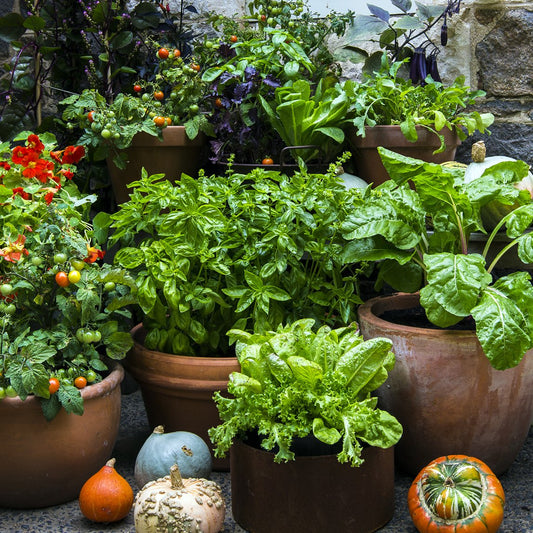
Containers look best when they’re grouped together, with pots of all different shapes and sizes closely clustered. It has a greater visual impact, cuts down on watering and creates interest and biodiversity. Group plants that require similar levels of watering together, bearing in mind that plants in terracotta pots will dry out faster than others.
Grow what you eat
Almost all vegies can be grown in pots, with the exception of crops that are too big to maintain. Planting a wide range of vegetables mixed with herbs and flowers encourages beneficial insects to your potted landscape. These ‘good guys’ will pollinate your crops and help control pests and diseases. When planning what to plant in your edible garden, there are a few things to think about.
- What are your favourite edible plants? If you plant what you love to eat, the more likely you are to use your harvest and be enthusiastic about your potted garden. Look for space-saving varieties – bush beans and peas, determinate tomatoes, mini cauliflowers and cabbages.
- Grow plants that appeal to all your senses – fragrant plants, in particular, add a sensual element.
- Which plants do you need a small amount of, often? Herbs are a good example.
- Which edible plants are hard to find in the shops? Many heirloom varieties don’t have a long shelf life but look and taste great.
- Consider which plants are best suited to the local climate and the different microclimates you have in your garden.
- Seasonality – plan for each season, especially with your annual crops.
Spend time with your plants
It is a good practice to check your pots morning and night. Check watering, feed
when necessary, harvest when ready, observe what maintenance may be required and be on the lookout for any pests and diseases. This check-in becomes part of your routine and a time with your plants to be enjoyed.
Growing requirements
You are responsible for fulfilling all the needs of your plants when growing in pots – sunlight, water and nutrition. Keep up the water, but don’t overwater. Many plants suffer from overwatering which can stress plants as much
as drying out.
There are some great organic potting mediums that have been designed specifically for edibles in containers. Buy the best quality that you can afford. Biochar is a great addition to your potting media. It helps retain moisture and nutrients, so nutrients are more likely to be used by your plants rather than leached out.
Mulching limits evaporation, reduces the germination of weed seeds, insulates roots and keeps the potting mix in good condition. Pea straw, lucerne or good quality compost are ideal. Liquid feeding with a complete organic fertiliser, alternated with doses of seaweed solution, will keep your plants happy and healthy.
Be creative
Edible gardening is all about maximising productivity, and this is especially important in container gardens. Depending on the size of your pot, you can often plant a number of different varieties in one container. Try companion planting in the same pot or in a group of pots.
Think creatively – you can grow many crops vertically by using a teepee or other climbing frame and underplanting with lettuces, spinach or herbs such as basil and parsley. Consider growing in hanging baskets, window boxes or wall pots, where edibles add greenery and delight to positions that might otherwise be wasted.
More in Learn


Grow your own Herb Garden
Herbs provide delightful colour and fragrance to our gardens and delicious flavours for our kitchens.

Growing an Edible Vertical Garden
Vertical gardening is an excellent way to turn a small footprint into a basketful of produce for your table.

Indoor Gardening Ideas
If you have the right position, you’ll be surprised at just how productive a table against a window, the side of your sink, or even a laundry cupboard...
Featured Products
Member
$4.47
Retail
$5.95
Member
$7.16
Retail
$8.95