
How to prune fruit trees in winter
Winter is the time to take a good look at your deciduous fruit trees and do any necessary pruning

How to prune your fruit trees?
Fruit trees need water and light. Pruning improves the penetration of light throughout the tree as well as improving air flow, subsequently minimizing the risk of disease.
The ultimate objective of winter pruning is to open up the tree, allowing light and air to penetrate, while encouraging a strong branching system capable of supporting an abundance of heavy fruit.
The whole process is not dissimilar from pruning roses, in fact, the main concepts are the same:
- Remove dead and diseased wood (including broken limbs)
- Remove unwanted vertical shoots as well as those facing downward
- Remove branches growing in toward the centre of the tree
- Remove the weakest of any branches that may be rubbing, growing too closely or crossing over one another
Prune sweet cherries, European and Japanese plums to an open vase shape. No annual winter pruning is then required for another three years except to remove dead or diseased wood or crossing branches. Apricots are best left in winter and pruned in early autumn, to reduce the risk of fungal disease entry.
Cut peach and nectarine trees to a half of the previous year’s growth. Apples and pears can develop very well with only light pruning to remove weak growth. Prune to an open-centred vase shape to allow for maximum sunlight penetration.
When to prune your fruit trees?
Summer pruning removes superfluous growth, while the winter prune is vital for the trees continued performance and longevity.
Winter pruning should start as late in winter as possible. Apple and pecan trees should be pruned first, followed by cherry, peach and plum trees.
A good rule to follow is to prune the latest flowering trees first and the earliest last. You should also prune older trees before younger trees.
Each tree may take up to 45 minutes to prune correctly, so take your time, moving slowly throughout your orchard.
Pruning techniques
There are two basic pruning techniques that should be used according to the type of fruit trees you grow.
1. Central Leader Training
This is used for apple, cherry, pear, pecan and plum trees.
This involves having a single trunk (leader) in the centre of the tree and the branches stem out from this creating an overall shape similar to a Christmas tree.
The aim is to have branches evenly spaced around and up the tree with a maximum of 3-4 branches on any tier.
Leave adequate room for light and air movement before creating another set up buds to become the next tier and so on all the way to the top. A space of around 40-50cm between tiers is ideal. The lowest tier should be the longest and the highest the shortest.
When pruning, leave the central leader if the tree has more growing to do, however if it has reached its final height, prune the leader back by about two thirds.
The lateral branches should be pruned back leaving around 6-8 buds on each branch, paying special attention that the overall shape is maintained.
2. Vase Training
This is used for peach, nectarine and plum trees.
This involves removing the central leader creating an open centre where the branches fan out to look like a large bowl or vase.
These trees have about 4-5 major limbs that come from the trunk about 50-70cm from the ground. These branches are then pruned to around 60-90cm in winter.
Remember to always prune to an outward facing bud.
Which pruning tool do I use?
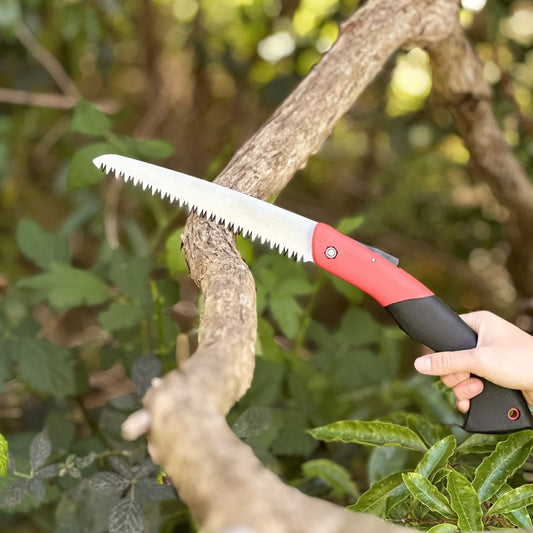
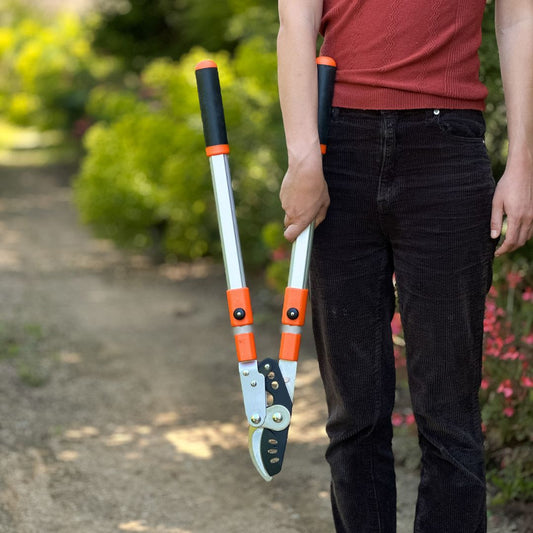
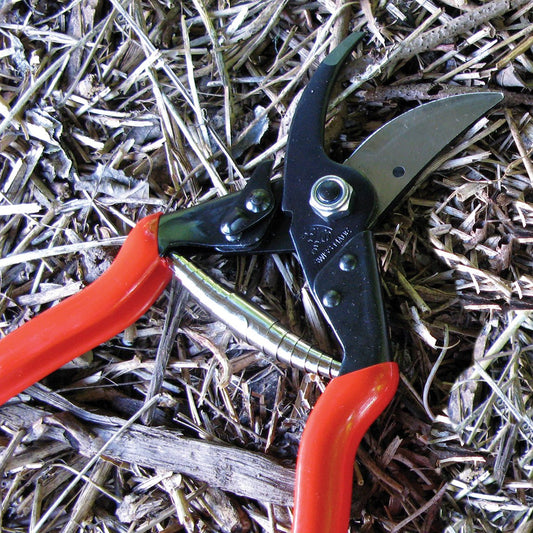
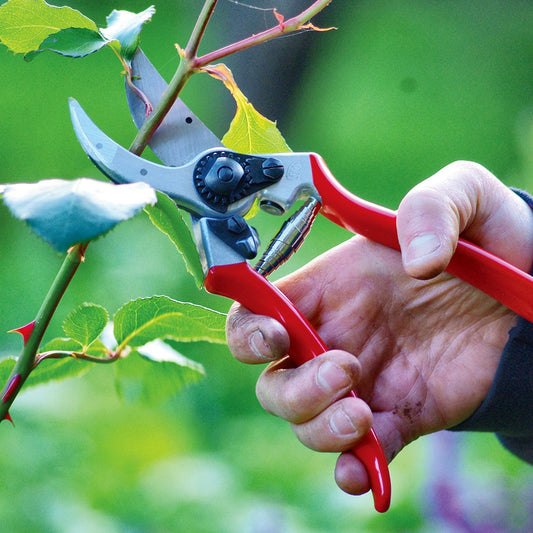
Using the correct pruning tools is important. Use secateurs for branches up to a finger thickness and loppers to remove branches which are up to 3cm thick. Anything larger than this, will require a hand saw. Always ensure your tools are sharp and sterilised to prevent disease spread.
More in Learn


Summer Pruning: video
Find out how to rejuvenate an old fruit tree into a productive one with some summer pruning.


Maximising yield by summer pruning fruit trees
Julian Blackhirst explains the essentials to improve yields from your orchard.
Featured Products
Member
$30.00
Retail
$37.50
Member
$63.75
Retail
$75.00
Member
$75.96
Retail
$79.95
Member
$125.88
Retail
$132.50