
Pest Control
Be vigilant and prevent pest populations getting out of hand in your garden with our simple guide to garden pest control.

Snails and slugs
Snail and slugs have been seen in huge numbers this year with the increased humidity of summer. At this time of year they would start to build their numbers, and given how high they are now, protecting your crops is even more important. It is best to take a multi-faceted approach when it comes to these slimy garden inhabitants. And be vigilant; weekly assessments and treatments will help you to get on top of them.
- Prune and tidy your garden. You will find clusters of snails hiding in the foliage of your plants. A big clean-up will help to remove their hiding spots and you can usually scoop them up and dispose of them in the rubbish.
- Snail traps are a non-toxic way of trapping snails as they are attracted to the bait (usually beer) and then drown in the trap. These should be emptied readily and refreshed with a new bait.
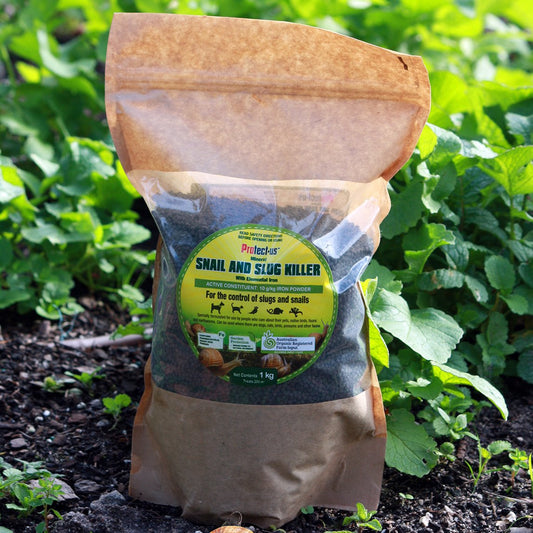
- Snail and slug pellets help to protect plants when scattered around new seedlings in a protective ring. Hopefully the snails eat these and die before reaching your yummy seedlings.
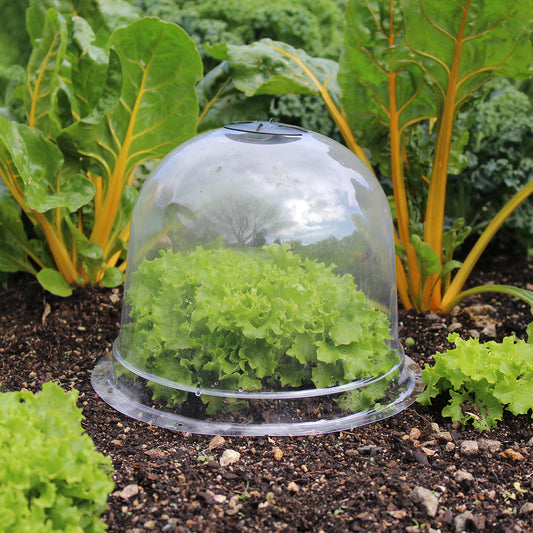
- A cloche can act as a physical deterrent. Copper tape also helps to prevent snails entering an area as the dislike the electric charge it gives off.
- Night-time hunting mission with a torch and bucket can prove very successful. Simply gather them up and dispose of them in their masses.
Cabbage Moth and Cabbage White Butterfly
These delightful looking butterflies and moths are the parents of very hungry caterpillars which love to feast on your Brassicas. Usually less active in the cooler months, they are easier to control at this time of year, which is fortunate, as this is the optimal time to sow and grow cabbages, cauliflowers and kale.
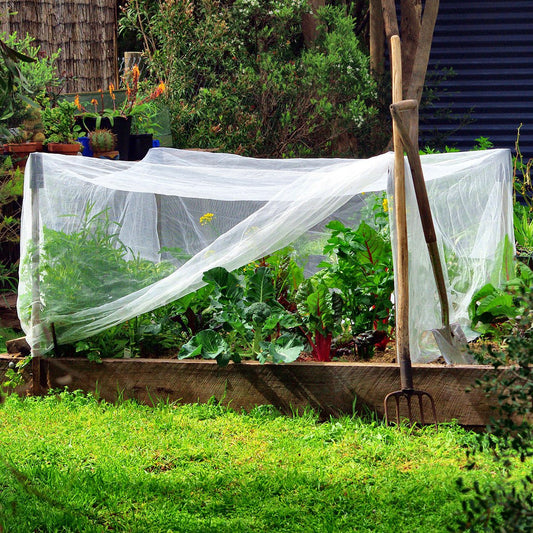
- Physical barriers are ideal. Fine insect netting held tightly over crops forms a barrier to prevent all manner of pests from attacking your crops, including birds. Any netting should be used with a structure so that they can be held tightly in place without resting on your crops. Brackets are available to make it easier to form square or rectangular beds, otherwise you can try bending polypipe or making your own structure from bamboo or steel.
- There is much conjecture as to whether decoys work. The idea is that if a butterfly or moth sees that someone else is already in the area, they will move on to find a cabbage of their own. A decoy can be as elaborate as an artificial moth on a stick, to some eggshells scattered around the garden.
- Bacillus thuringiensis (BT) is a soil bacteria which can be sprayed in gardens to control the all caterpillars (and larvae of young insects). It is non-toxic to mammals, birds and fish. A natural product, BT should be applied weekly while pests are present. There is no withholding period for edible crops although you should always wash produce from the garden before consuming.
- Plant a decoy crop. Many organic gardeners swear by this model. Plant a crop for yourself, and other for the pests. Just make sure it is located away from your actual crop.
Nematodes
Whilst you cannot see them, nematodes can be present in your soils. Plant parasitic nematodes live inside plant roots causing disease and general loss of vigour of the infected plants. Whilst nematodes are a natural part of life, there are several things you can do to limit their presence in your garden.
- Crop rotation is key to preventing the build up of presence of nematodes. Commonly found and attracted to the Solonaceae family (tomatoes, potatoes and capsicums), by following a crop rotation plan you can limit their presence in your garden and soil. Diggers recommends planting brassicas in the garden beds which housed your tomatoes, and we also suggest you do not plant tomatoes in this bed again the following year.
- Fumigate the soil naturally with mustard. There are ways you can forcible clean soil. This can be done through solarisation (covering the soil with plastic and allowing it to heat up to high levels and weaken pathogens). This impacts both good and bad soil inhabitants (like antibiotics). The other way is by planting a crop which they do not like – like mustard... or mustard biofumigant, as we call it. This is a mix which is grown as a green manure crop to help cleanse the soil and provide additional organic matter to your soil. This is ideally sown and grown in beds after solanaceous plants.
Slaters
Not usually discussed, but well worth a mention, if you have slaters in your vegie garden, it can become a real problem. While they do a great job breaking down detritus, sometimes they like to have a nibble on young seedlings, carrots, you name it. Fortunately, there are a few means of control.
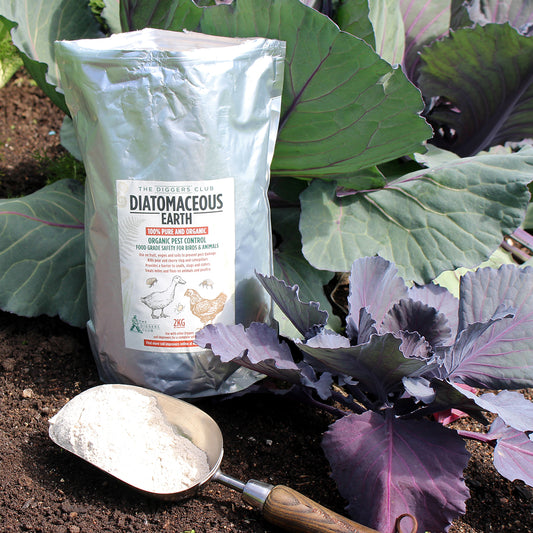
- Diatomaceous Earth (DT) is a natural product made from fossilized shells. Sprinkled around plants it can protect them from various pest including snails and slugs, caterpillars, aphids and slaters. The only issue is that it needs to be applied regularly after rain or overhead watering.
- Snail traps can be baited with yoghurt and water. This attracts the slaters and they drown in the bait (the same way snails drown in beer).
- Rolled up newspaper located among your plants can provide a tempting hiding spot which can then be easily removed and thrown in the bin.
Aphids and mites
Most commonly found throughout the warmer weather, unfortunately these chewing pests can still be present throughout the year in some climates. Minimising their numbers is an important part of garden maintenance, and controlling them now can help to shrink their population in early spring.
- Natural oil sprays are commonly used to deter most sap-sucking insects including aphids, mites and scale. Eco-Oil is an organic insectide (and miticide) with no with-holding period which is safe for use on most garden plants and is safe for bees and beneficial insects. Avoid spraying on hot, dry sunny days.
- Eco-Neem is another spray which is a registered organic insecticide. This is made from an extract of the Neem tree, combined with various other organic oils. It helps to control a range of sucking and chewing insects, and can be used alternatively with Eco-Oil to prevent pest resistance.
- Pyrethrum is a natural deterrent and can be made into a spray to deter aphids from your crops. This lovely daisy can also be grown as a companion plant.
- Diatomaceous Earth (DT) can be scattered over plant foliage (especially buds and young shoots) and will kill any aphids that attack your plants. All natural, you will need to reapply after rain or overhead watering.
- Blast them off with a jet of cold water. This can dislodge them from your plants and deter them from returning to the same plant.
- Dust plants with flour. Yep, flour from the cupboard. Plain or self-raising, when they consume the flour, they become constipated and die.
Scale
There are several types of scale insects which impact plants and gardens. Sap-sucking insects which are usually hidden under a hard shell, control is similar for many pests which attack the sap of your plants. Scale is a part of a network of pests and issues which include ants, sooty mould, and honeydew. Control is vital for overall plant health, especially in fruit trees and ornamentals.
- If found in low numbers, the scale pests can be scraped from infected material and squashed between your fingernails.
- Eco-Neem and Eco-Oil are both organic oil-based sprays which can be used alternatively to treat scale infestations. These sprays have no with-holding period and are safe to use on most plants.
- Beneficial insects and predatory mites can be introduced to the garden or you can attract them with suitable flowers, by installing insect hotels and creating suitable habitat, and by using lures. Ladybirds love to feed on scale and can be an important part of the biological treatment plan.
Regular garden observation is key to maintaining a healthy garden, and healthy plants are less susceptible to attack than weak or sickly plants. Be sure to fertilise and water plants as needed, keep the area free from weeds which usually act as habitat for pests, and treat any infestations as soon as you see any signs or symptoms.
Featured Products
Member
$26.00
Retail
$32.50
Member
$22.80
Retail
$28.50
Member
$18.75
Retail
$25.00
Member
$9.72
Retail
$14.95