
How to Grow Melons
Melons are lots of fun to grow and the flavour of homegrown heritage variety melons is far superior to the boring supermarket varieties.

How to grow watermelon and rockmelons
As with most supermarket produce, the melons that are commonly offered are bred for ease of transport and shelf life rather than taste and diversity. The range of melons available to the consumer is incredibly narrow with an estimated 90% of heirloom varieties being either lost or close to extinction.
Growing diverse heirloom varieties in your garden helps to save our food heritage and keep the joy of eating these treasures alive for future generations.
Top tips for growing melons
Melons grow on a trailing vine much like their close relatives cucumbers and pumpkins.
- They love hot weather so it is best to plant them in the sunniest place in your garden
- They can be left to trial along the ground or grown up a support like a trellis
Top tip for growing watermelons
If you are growing watermelons up a vertical trellis then you may need to support the weight of the developing fruit by putting them in a string bag that is attached to the trellis. This will stop the heavy fruit from falling or pulling the vine down.
If you are growing your melons in a warm sunny environment it is best to direct sow the seed in November.
- Sow three seeds 5-10cm apart then thin down to one plant which is the strongest, healthiest looking seedling.
- Remove the others as melons grow better if they are given 1-2m between plants.
In cooler climates, seeds can be sown in pots or punnets then transplanted when the weather warms up. This is not necessary for Melbourne and that is better to plant later than to try to nurse seedlings through cooler weather.
Another option is to direct sow seeds under a cloche if winter is dragging on.
How to plant melon seeds or seedlings?
- Seeds or seedlings should be planted in well prepared soil with good drainage
- The soil should be enriched with compost or well rotted manure. No extra fertilising is necessary until the fruit starts to develop
- At this stage sprinkle around some organic pelletised manure and give fortnightly liquid feed of worm juice and seaweed extract over the foliage This helps the fruit develop and also helps to stave off powdery mildew which can easily develop in the later stages of growth.
- Keep the plants well watered but don’t water too much prior to harvesting fruit. Holding back water at this stage will concentrate the flavour of your melons.
When to harvest melons
- You will know when your rockmelons or canteloupes are ready by observation, smell and feel.
- When you lightly press the base of a rockmelon it will have a little bit of give when it is ready.
- They will also change colour and start to give off an incredible sweet perfumed aroma.
Watermelons are more of a challenge to know when they are truly ripe. Some people tap the melons listening for a hollow pinging sound rather than a dull thud. However, it is easier to observe the tendril closest to where the melon attaches to the vine. When this is brown and withered then the melon is generally ready to pick and eat.
Canteloupes or rockmelons will reward you with multiple fruit on each vine.
Below is a table summarising our trial data on some of our more popular varieties.
All of our varieties are trialled and selected for taste and productivity.
| Trial Variety | Fruit | Yield | Harvest |
|---|---|---|---|
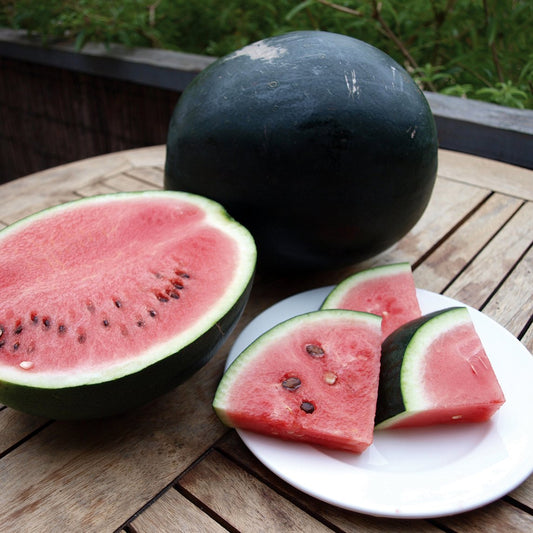
| Blacktail Mountain Watermelon | 4 per plant | 23kg | 15 weeks |
| Golden Midget Watermelon | 7 per plant | 18kg | 14 weeks |
| Sweet Siberian Watermelon | 5 per plant | 20kg | 10 weeks |
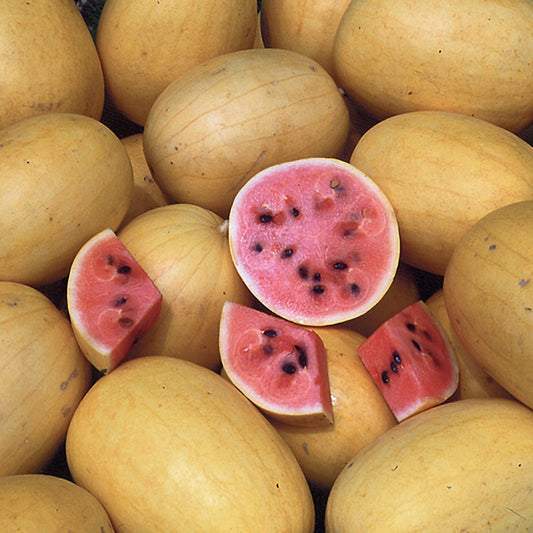
| Mountain Sweet Yellow Watermelon | 3 per plant | 27.5kg | 15 weeks |
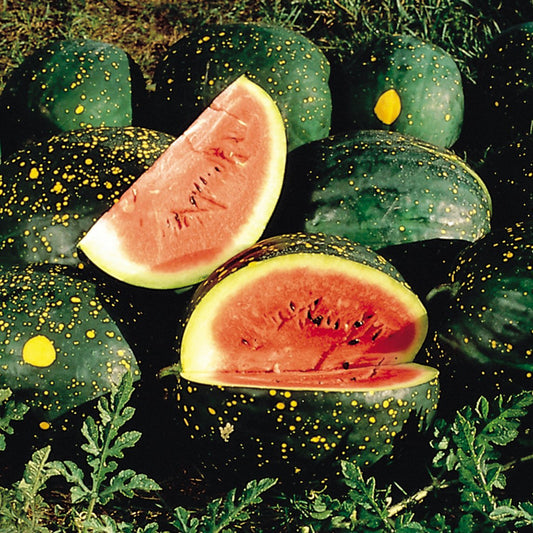
| Moon and Stars Watermelon | 3 per plant | 25kg | 14 weeks |
| Cream of Saskatchewan Watermelon | 4 per plant | 19kg | 10 weeks |
| Ananas Rockmelon | 7 per plant | 9.5kg | 16 weeks |
| French Charentais Rockmelon | 15 per plant | 13kg | 15 weeks |
| Ha-ogen Rockmelon | 14 per plant | 12.5kg | 14 weeks |
More in Learn

How to grow Rock Melon and Cantaloupe
There is nothing quite like a homegrown melon left on the vine to soak up the sun and picked when it is perfectly ripe.

Discover the beauty and flavour of heirloom melons
Heirloom melons are a delightful treasure trove of flavours, colours, and histories.


How to Grow Pumpkin
Pumpkins need a long warm season, deep organic soils, and plenty of water while they grow.
Featured Products
Member
$4.17
Retail
$5.95
Member
$4.17
Retail
$5.95
Member
$4.17
Retail
$5.95
Member
$5.56
Retail
$6.95