As we learn more about the internal workings of our body it is only recently that the importance of understanding the causes of obesity, asthma, type 2 diabetes and autism has led to the vital role gut bacteria play.
There are millions of bacteria in our digestive tract which can either aid in food processing or become destructive, upsetting our immune system.
Dietary fibre plays a special role because it is food that our good bacteria feed on and ferment this fibre which improves our immunity to disease; so dietary fibre is food for bacteria rather than food for ourselves.
This principle echoes a basic tenet of organic gardening that instead of directly feeding plants as modern agriculture does, in organics we feed the soil not the plant so that it is the soil that then feeds the plants.
All ecological systems need a biodiverse balance of species which creates a healthy balanced equilibrium and our gut is no different.
The recent TV programmes on Catalyst by the ABC are continuing the story of the impacts on our health and longevity from our poorly regulated food supply.
The pedlars of fast food and multinational food companies continue to replace the vital ingredients of dietary fibre in our processed food with sugar and fat, leading to obesity and increases in type 2 diabetes. Processed food promotes bad bacteria and we become sick and obese as a consequence.
When we compare the diets of hunter gatherers before the rise of agriculture their consumption of fibre was up to 200 grams per day, more than 10-15 times the level of Australians today. The National Health and Medical Research Council recommend 25-30 grams per day.
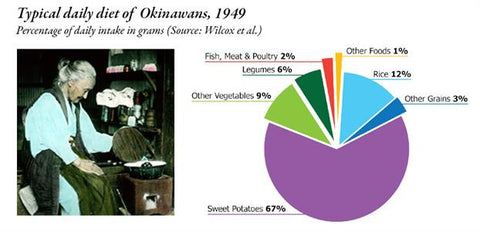
Those that eat the highest fibre diet live the longest. This is demonstrated by the Okinowans in Japan but modern medicine's overuse of antibiotics has had the unexpected effect of destroying good bugs in our intestines; almost like dropping a nuclear bomb on Hiroshima.
Seeds that we eat have the highest contents of fibre with nuts, legumes and wholemeal breads being excellent sources. In the processing of food for sale almost invariably fibre is processed out and sugar and fat are added to increase taste appeal.
Roughage is plant material that cannot be digested, which aids the passage of food and waste product through the gut. Insoluble fibres do not dissolve in water but add bulk and pass through quickly and intact. Most people think of celery as roughage but it is mostly water — a good appetite filler, but contains only 1.6% fibre.
However, gardeners who grow their own food and prepare it in the kitchen without adulterating it, are accessing the most nutritious sources of food that have led to longer lives.
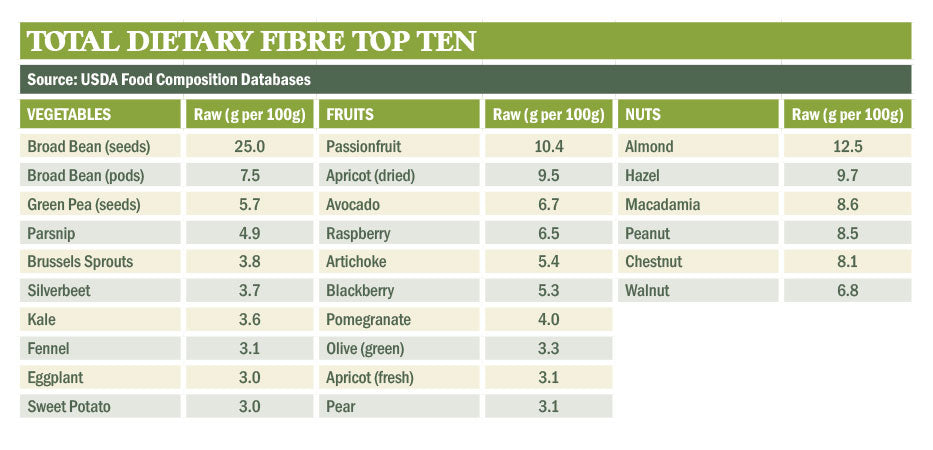
See table below for some of the highest fibre foods that are common in our diet.
Juicing loses 90% of fibre
Of course those who have fallen for the juicing fad are excluding 90% of the benefit of food fibre as all the ‘pith’ that you discard is actually where the good stuff is.
When you juice an orange the fibre content drops from 2.2% to just 0.2% and it’s the same for apples and lemons.
The skin of apples and potatoes is the best source of fibre and antioxidants. Those who peel it off are destroying most of its value. For those wanting to explore this issue further look up “American Gut Project, Boulder Colorado”. They analyse faeces for gut bacteria from as far away as Australia
High fibre diets from sweet potatoes
The purple Sweet Potato, cultivated by Okinawans, has very high levels of antioxidants (up to 2.5 times the anthocyanin levels of blueberries!) and is also high in flavonoids, vitamin C, carotenoids and slow-burning carbohydrates.
Also known as Hawaiian Sunshine, it is high in flavonoids, vitamin C, carotenoids and slow-burning carbohydrates with six times the dietary fibre of pumpkin and 50% more than potatoes. Combined with the high levels of antioxidants (up to 2.5 times the anthocyanin levels of blueberries!) Purple Sweet Potato is the tastiest elixir for long life you can get.
Michael Pollan, the Californian food ethicist, succinctly articulates many mantras for a healthy human diet in his book The Omnivore’s Dilemma and Food Rules: An Eater’s Manual .
Some of these include “Don’t eat anything your grandmother wouldn’t recognise as food”, “Eat food, not too much, mostly plants” and “Always leave the table a little hungry”.
The last two, in particular, resonate with the story of the world’s longest-lived people from the tropical Japanese island of Okinawa.
The notion of eating less than your appetite demands is echoed in the Confucian proverb “Hara Hachi bu”, an adage often spoken by fit and healthy centenarians translating as “stop eating when you’re 80 per cent full”.