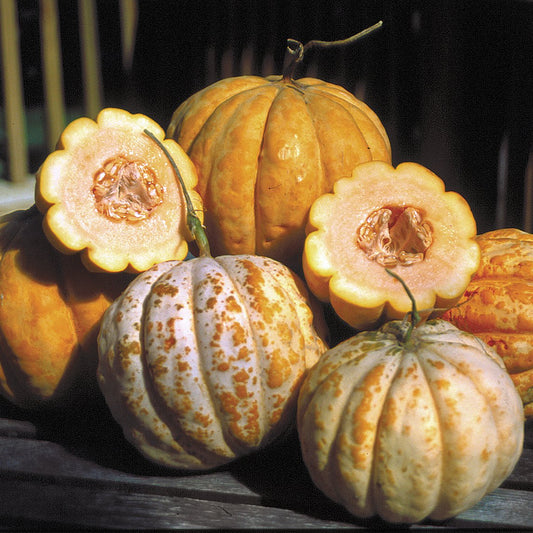
Discover the beauty and flavour of heirloom melons
Heirloom melons are a delightful treasure trove of flavours, colours, and histories.

Over the many years Diggers has been championing heirloom seed varieties, we rejoice at the sight of heirloom produce, slowly moving from the home garden to the farmers market, and to mainstream greengrocers and supermarket shelving. Flavour is key and we all want that connection from garden to table.
Tomatoes could be seen as the flag bearer of this wave of interest, readily capturing the imaginations of home gardeners with their vast diversity of shape, colour and flavour. Next were the pumpkins with their immense diversity of shape, colour, size and flavour. We would like to think this has been aided in some part by the work of The Diggers Club and the dazzling mountains of fruit we have grown for exhibition at the Melbourne International Flower and Garden Show over the last decade. But have you discovered an equally bedazzling group of heirlooms - the Melons.
Melons, or Cucumis melo, are a member of the gourd family, Cucurbitaceae. Having travelled the road of history with humans for such a long time, there is archeological evidence dating back to 2,000BC relating to origins in both Africa and India.
As a group, melons are tender annuals, meaning they don’t tolerate frost but they do thrive with long, hot growing seasons, provided they receive ample irrigation where natural rainfall is not sufficient.
Best started in most areas in punnets under controlled conditions, like a glasshouse or propagation unit, this is the best method for gardeners in cool regions of Australia to help jump start the season and ensure a successful harvest. In warmer areas with temperatures between 24-35oC range for 14+ weeks, seed can be sown and grown direct.
As with many fruits and vegetables, commercial cultivars along with their growing techniques and harvest principles, which are all focused on getting crops to the store in a prime salable condition, doesn’t actually relate to growing food for flavour. To be fair, in a commercial reality, this is the compromise. This system can’t allow melons to develop their full fragrance, wonderful sweetness, and delicious juice, because when they reach this stage, they are fragile and not suitable for transport, and will not last long long on the shelf.
Because melons do not continue to ripen and develop optimal sugars etc when cut from their vine, the only way to enjoy their true flavour and aroma, is by growing them at home, and harvesting the fruit at the point of complete ripeness. When ready for harvest, some melon varieties will slip off the vine, literally harvesting themselves, and all melons share a deliciously sweet fragrance when the time to harvest is right.
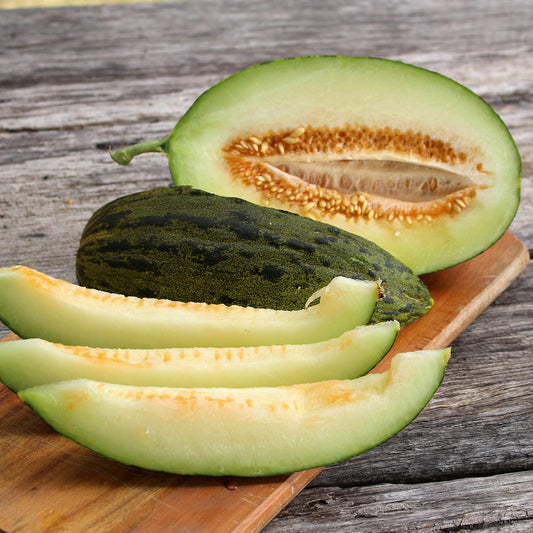
Muskmelons, netted melons, honeydew, rockmelon, cantaloupe and watermelons, there are many varieties available, and all offer something unique for your table. From the small fruiting but prolific ‘Minnesota Midget’ which is more suited to cooler climes with shorter growing seasons, to the later cropping egg-shaped ‘Piel de Sapo’, so named for its toadskin-like exterior, to the highly ribbed 1885 French heirloom variety ‘Delice de la Table’, you’ll discover a world of flavour to explore this summer.
Did you know?
Melon seeds can no longer be imported into Australia. So aside from the pure pleasure to be had from growing your own heirloom melons, you’ll be helping to maintain and preserve a legacy of melon growing in Australia.
So if you have an heirloom melon in your family seed collection, consider sharing it with Diggers through our seed donation program, and we will try to preserve it for future generations of gardeners to enjoy. Visit donate a seed here.
More in Learn

How to grow Rock Melon and Cantaloupe
There is nothing quite like a homegrown melon left on the vine to soak up the sun and picked when it is perfectly ripe.

How to Grow Melons
Melons are lots of fun to grow and the flavour of homegrown heritage variety melons is far superior to the boring supermarket varieties.


What are Fruit Flies?
Fruit flies are destructive pests and can attack up to 300 species of fruit and above ground vegetables.
Featured Products
Member
$5.56
Retail
$6.95
Member
$4.17
Retail
$5.95