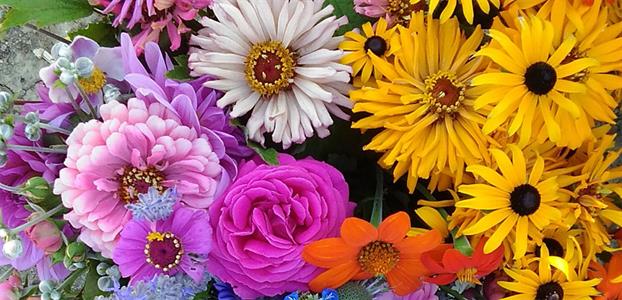
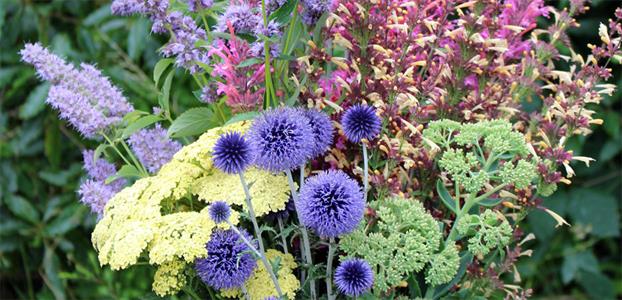
The backbone of a perennial border are herbaceous plants such as Achillea, Penstemon, Delphinium, Salvia nemerosa, Gaillardia, Shasta Daisy, Phlox, Erigeron and Coneflower, which retreat underground in winter (unlike evergreen Lavender and Agapanthus) and re-emerge in early spring.
Removing the spent flower spikes from the growing crown will induce new flower spikes.
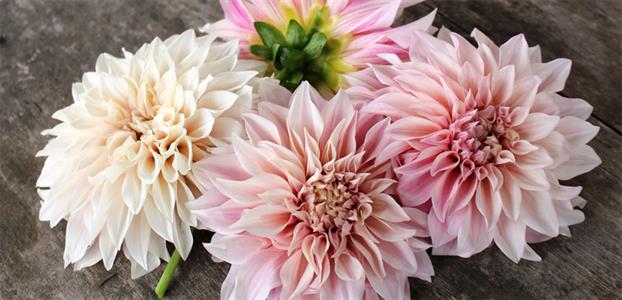
Dahlias, Cannas and Salvias from subtropical climates need warmer soils to initiate flowering and produce their best flowers in late summer and autumn, so there is with no need prune, other than to remove spent flowers.
Overly vigorous perennials such as Evening Primrose ‘Pink’, Verbena ‘Polaris’ and Catmint revive so rapidly that you can cut all the foliage with hedge clippers right to the base, which will stimulate reflowering at least three times.
Lavender, Rosemary and Santolina will thrive after removing the flowering spikes, so cut them back and bring the perfumed spikes indoors in January, and you'll still enjoy a second flowering.
Romneya, Russian Sage and Verbena bonariensis will not resprout but by dead-heading, i.e. removing stems from the crown, this will prevent seed production and extend flowering until March.
All plants, even annuals, will flower for longer when you prune spent flowers to prevent seed production. Plants like Agastaches, Globe Flowers (Echinops) and Dahlias will repeat flower with the simple removal of the spent flower heads contrasting to Achilleas where the whole flower stem is removed to the ground.
Plants that don't respond to dead-heading include Bearded Iris, Hemerocallis, Gladiolus and Alliums. Succulent Sedum ‘Autumn Joy’ wins the medal for flowering gymnastics with its broccoli-like flowers, needing no attention at all.