We are both blessed and cursed in Australia to have such a wonderful array of birds that visit us in our gardens.
Tim Sansom discusses Tim Low's new book.
We are both blessed and cursed in Australia to have such a wonderful array of birds that visit us in our gardens.
Blessed because we get to enjoy the unique melodious song and kaleidoscopic colours of our wild birds, but cursed because of their ravenous appetite for many of our exotic fruit and vegetable crops. Whichever way you look at it, the bird life of Australia is remarkable and unique and there is a good reason for this — our birds are the ancestral cousins of most of the birds throughout the world.
Turning bird evolution upside down
Tim Low, one of Australia’s foremost evolutionary biologists, brings together this fascinating story in his book Where Song Began – Australia’s birds and how they changed the world.
It’s a riveting tale that convincingly challenges the traditional evolutionary theory that disseminated from northern hemisphere evolutionary theorists like Charlies Darwin, Alfred Wallace and the 20th Century’s equivalent Ernst Mayr.
They considered that the oddities that comprise the Australian avian fauna are recently evolved descendants of the birds they were familiar with from the northern hemisphere. However, the last decade has yielded a body of evidence that throws these theories completely upside down, putting Australia as the centre of origin for the world’s songbirds, Parrots and Pigeons.
You can imagine the outrage amongst English gardeners when they discovered that their Martins, Larks and other familiar garden companions are in fact descendants of weird and other-worldly antipodean birds.
The story is complex and involves fossil specimens, DNA analysis and an understanding of the timeline of the breakup of the great southern super-continent Gondwana. The theory runs that neoaves, or ‘modern’ birds, emerged about 65 million years ago when Australia, South America and Antarctica were still joined.
This period followed the mass extinction event that resulted from a huge meteor impact at what is now Chicxulub in Mexico. It seems likely that the southern super-continent was kinder to birds in the south, leaving these survivors as the ancestors of many of birds throughout the world today. As the Gondwanan continents split from each other and Australia, India and South America headed north, the songbirds, Parrots and Pigeons that originated in these combined continents headed north into Asia, Africa and up into Europe.
Birds, plants and pollination
Insects evolved with flowering plants and were the main pollinating bridge for plants over most of the world, but in Australia the picture is different and unique. Australian birds displace insects as the main pollinators in many situations. You can sit in your garden on any given day of the year and you will most likely see Wattlebirds, Spinebills or Honeyeaters visiting and feeding on all manner of flowers. Australia has the most numerous and largest nectar-feeding birds in the world, all busily working for the plants that employ their services for their own reproductive needs.
The Australian flora has evolved with the combination of nutrient depleted soils and ample sunshine resulting in a surplus of carbohydrates that plants have utilised by making their flowers larger and more attractive to pollinating birds.
This, in turn, has favoured larger and more aggressive nectar-feeding birds that have evolved loud calls and territorial behaviours to defend this rich food source.
The diversity of our bird life is testament to the fact that Australian nectar-feeding birds have been visiting flowers for 40 million years, resulting in birds that are more likely to eat sweet foods, live in complex societies, attack other birds and be intelligent and loud.
Australia - the land of parrots
Australia is the ‘Land of Parrots’, both in terms of evolutionary history and modern-day diversity with many species cohabiting with us in our cities and gardens in numbers that eclipse the populations in other parts of the world. Sydney boasts more parrot species living in its suburbs than any country in either Africa or Asia.
As a result of their diversity and population, Parrots and Cockatoos are well-known to Australian gardeners. Here’s a tribe of birds that elicit the full range of emotions, from awesome wonder at the sight of a flock of Yellow-Tailed Black Cockatoos as they muscle their way through rock-hard pine cones, to the eternal frustration of a gardener watching a team of Rosellas vandalising a crop of yet-to-ripen apples.
Not only do Parrots wreak havoc on crops, they are known to decapitate flowers on flower farms, ring-bark almond trees, pull nails from roofs, break lights, ‘eat’ window trims and tear holes in walls. This wanton destruction has been attributed to their superior intelligence, an intelligence that needs engaging hence they turn to exploring roofs and destroying buildings.
Parrots need to occupy themselves to stay stimulated and they are known for their skills such as speech mimicry, the use of tools and even dancing!
A garden full of birds
One of the greatest joys a gardener can have is to sit in your garden on a sunny spring afternoon and watch the bird life that your garden hosts. Often the concentration of bird life in our gardens is far greater than in the surrounding native bush.
Native birds aren’t fussy and exotic garden plants like Echiums, Aloes, Agastaches and Salvias are magnets that they cannot resist.
Listen for the trill of a Fan-Tailed Cuckoo, the ‘bark’ of the Red Wattlebird or the chirp of a New Holland Honeyeater and realise the ancient and special place that our Australian birds have in the evolution of birds across the globe.
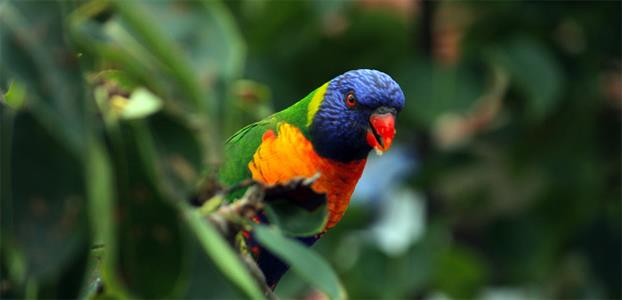
RAINBOW LORIKEET
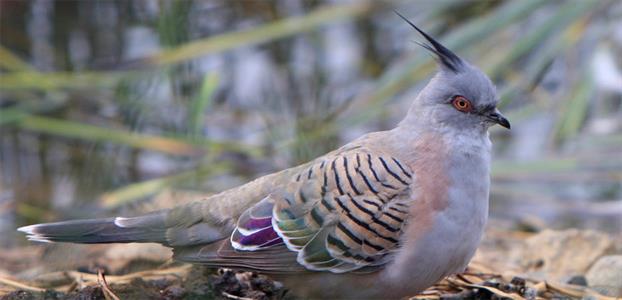
CRESTED PIGEON
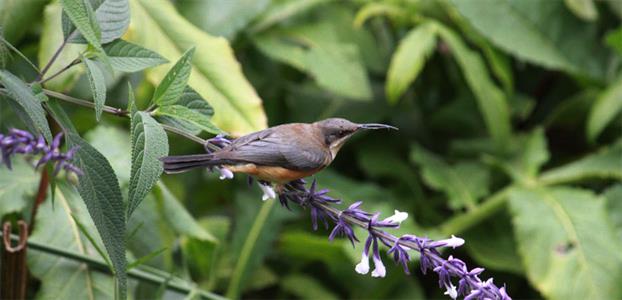
EASTERN SPINEBILL
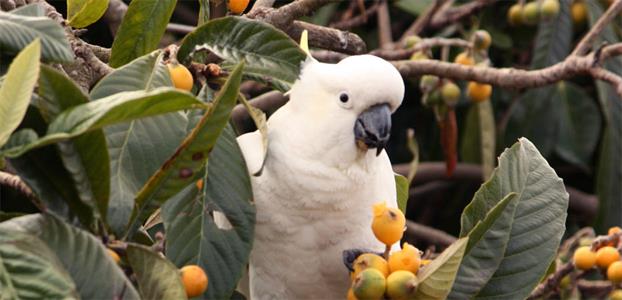
SULPHUR CRESTED COCKATOO