
All about Fertiliser
Fertilising plants is essential to ensure they grow healthy and strong.
Fertiliser contains three necessary components that plants require to grow and survive
Fertiliser contains three necessary components that plants require to grow and survive

Why Fertilise?
Fertilising plants is essential to ensure they grow healthy and strong.
Fertiliser contains three necessary components that plants require to grow and survive: Nitrogen, Potassium and Phosphorus. Nitrogen (N) is largely responsible for leaf growth, Phosphorus (P) for root growth and flower and fruit development and Potassium (K) helps the overall functions of the plant perform correctly. Australian soils tend to be lacking in nutrients so using a balanced fertiliser will help plants receive the necessary nutrients they need.
Types of fertiliser
Fertiliser comes in two main types: solid and liquid. Solid fertilisers look like soil and is very dry. You must mix it into the soil yourself so it can absorb into the roots of the plants. Solid fertilisers tend to come in slow-release balls which break down over time into the soil and pellets, which are smaller than the slow-release option but tend to work more quickly. Liquid fertiliser is easier to use and can be diluted. It works quickly and is great to sprinkle around the base of plants.
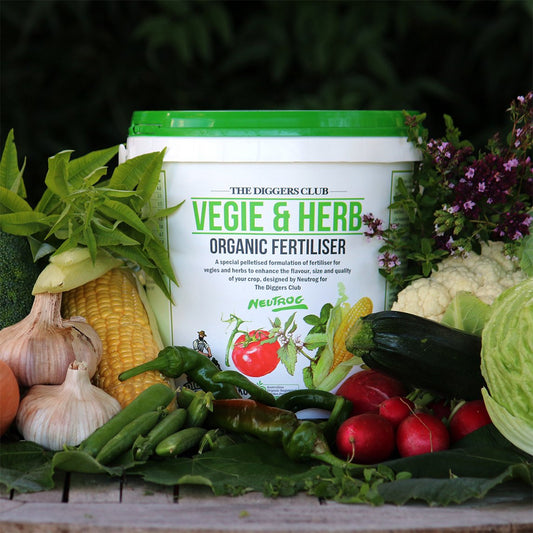
Diggers recommends the use of organic fertilisers. These tend to smell very strong but are made from completely natural things like manure, compost, and fish bones rather than the chemicals and salts of inorganic fertilisers.
When to fertilise
The best time to feed plants is usually during the months of September through to November. This is when plants are actively growing and will readily absorb the nutrients. You only need to feed flowering and fruiting plants about twice a year and trees about once a year unless they are heavy feeding varieties.
Fertilising Roses
Roses are heavy feeders as they put lots of energy into flower production, making large demands on the soil. They like to be fed three times a year: at first flush in spring, start of summer and again at the start of Autumn. A regular, generous application of well-rotted animal manure or compost, blood and bone are perfect for roses. They will also benefit from sprinkling pelletized rose fertiliser around the base of the plant and an application of liquid fertiliser like Charlie carp or Seasol which will help encourage plant vigour.
Fertilising Citrus
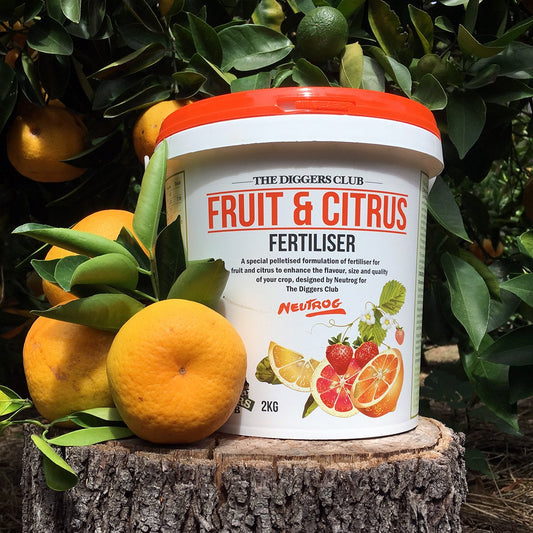
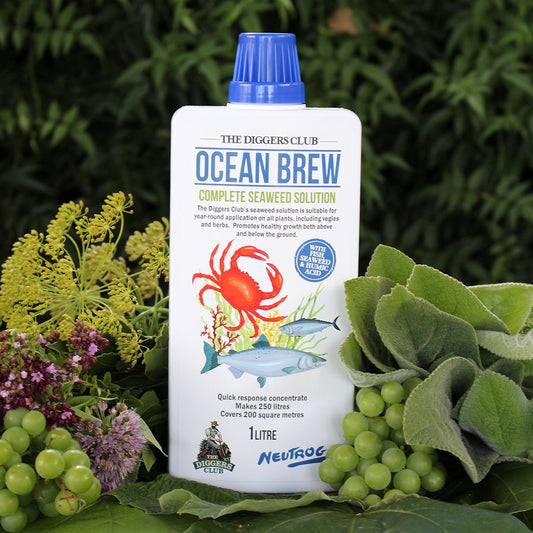
Citrus trees also get very hungry. Ideally, citrus should be fertilised in August and February. It is good to alternate fertiliser, Dynamic lifter in August/ September and Complete Citrus Food in February. Another good, general-purpose fertiliser is composted poultry manure, applied from Spring through Autumn. When not in flower, give them a handful per square metre and sprinkle thinly around the root zone and water in well. To make sure that the soil is well nourished, an application of seaweed emulsion in Spring, can help bring soil to life. Citrus in pots will benefit from fertilising every six to eight weeks with a complete Citrus food.
Featured Products
Member
$30.00
Retail
$37.50
Member
$30.00
Retail
$37.50
Member
$25.20
Retail
$31.50
Member
$19.96
Retail
$24.95