The English flower gardens that Australian travellers continually hunger for were created in the middle of the last century, and reached their ultimate expression at Lawrence Johnson’s Hidcote garden and Vita Sackville-West’s Sissinghurst castle. With an extraordinary selection of perennial flowering plants that thrive through frosty winters and coolish summers no country in the southern hemisphere (except perhaps New Zealand) is so blessed with good consistent rainfall and cloudy skies that sharpen the flower colours to create unforgettable floral impacts.
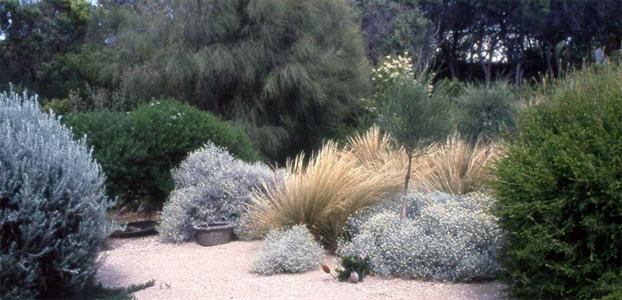
However there are many garden adaptations that will lift Australian spirits despite our intense heat, poor soils and water limitations. Many of Australia’s native plants are of course perfectly adapted to extreme heat and drought. Over thousands of generations our native shrubs, both low and medium sized, have survived by evolving woody stems.
These shrubs have tough foliage and flower mostly in the cooler months of winter and spring. Their virtue is their evergreen foliage and ability to survive in soils low in phosphorus and carbon. However very few have the spectacular summer flowers of northern hemisphere herbaceous perennials such as delphiniums, lupins, poppies and hollyhocks that have soft, fleshy foliage spurred on by extreme cold and adapted to more fertile soils. Herbaceous perennials retreat underground in winter thereby building up energy stores for rapid and spectacular flowering in summer.
This article is not meant to denigrate our magnificent and spectacular wildflowers but simply point out that because they flower too early – just as tulips do – they are largely unsuitable plants for our summer gardens. Tulips of course are unsuitable for cultural reasons because they need dry soil in summer when they go into dormancy, but perennials with their rapid growth need watering which causes the tulip bulbs to rot.
Fortunately there are still hundreds of perennials that adapt well to dry summers and moderately cold winters. Just as ninety-nine percent of the vegetables and fruits we eat such as apples, strawberries, tomatoes and potatoes are exotics introduced to meet our food needs, the same is true of most of the flowers we grow in our gardens such as tulips, lavender, rosemary and lilies.
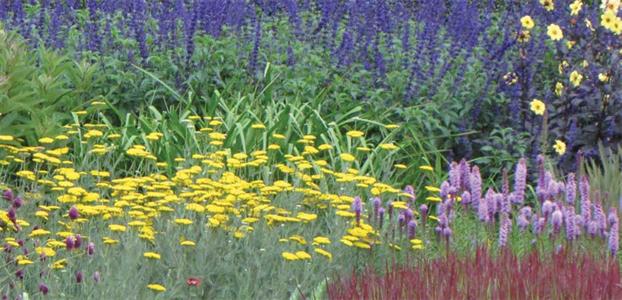
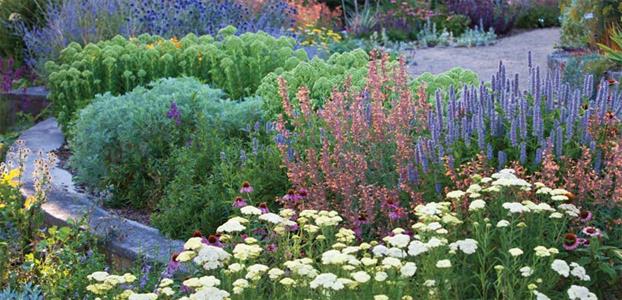
We call these modern perennials because they are heat tolerant and don’t need staking. These are permanent plantings with strong form above the ground, unlike short lived annuals that leave gaps after flowering and empty beds that weeds invade.
Perennials are manoeuvrable in the sense that they can be dug, divided and replanted. Most will live for 3 to 5 years, and some for decades. Because perennials are soft, fleshy (and not woody) and have soft green colours compared with our natives they have cooler textures and provide spectacular flowering throughout summer, not just in spring.
By choosing drought tolerant forms that don’t need staking these so called ‘old fashioned’ cottage flowers are the ideal solution for an Australian summer flower garden. Very few natives have the perennial form that fits within a perennial border.