
The Ultimate Guide to Growing Brussels Sprouts
The greatest challenges bring the greatest rewards and while Brussels sprouts can be tricky to grow, the reward for effort is the highlight of the winter vegie garden.

Brussels sprouts, often overlooked and underappreciated, are a vegetable that holds immense value both culinary and nutritionally. Often associated with a strong, distinct flavour (and childhood trauma), when cooked well, these flavour bombs are a true culinary delight.
An acquired taste, the benefits of growing and eating Brussels sprouts are plentiful, and when harvested while young, their flavour is out of this world.
A long harvest Brassica, Brussels sprouts are best started from seed in January, in most parts of Australia.
Growing Brussels sprouts from seed
Sow in seed raising mix in a controlled environment. Sow seed around 1cm deep and about 5cm apart to prevent root entanglement. Keep the soil consistently moist, and ensure the trays receive ample sunlight to encourage optimal germination. Seed should germinate within 5 to 10 days at a temperature between 18 to 24 degrees Celsius.
Once seedlings develop their true leaves, transplant into individual pots. Allow plants to grow to around 10-12cm before hardening off the seedlings. This is done by gradually exposing them to outdoor conditions, starting with short periods and gradually increasing this time over a week. This greatly reduces transplant shock.
Choose a position in full sun. Enrich soil with compost, if needed, prior to planting. Space plants at least 50cm apart.
Brussels sprouts thrive during the cooler temperatures of autumn and winter but need to be started in summer to allow enough time for the sprouts to develop and mature (usually between 20-25 weeks).
Protect from snails and slugs while young, and caterpillars as the crop develops. Mulch to help retain soil moisture and suppress weed competition.
When plants reach about 50cm high, pinch out the growing tip to encourage lateral growth and to kickstart the development of delicious sprouts along the main stem.
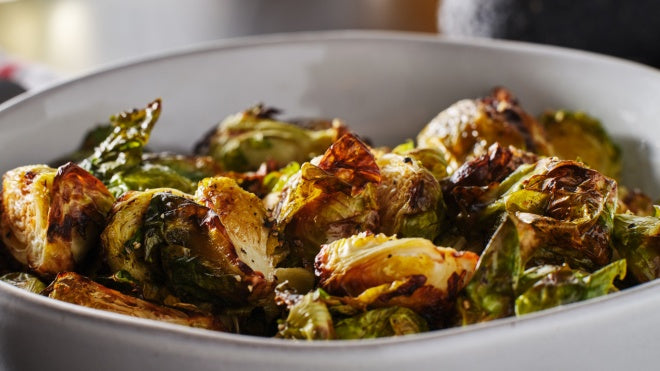
Harvesting Brussels sprouts
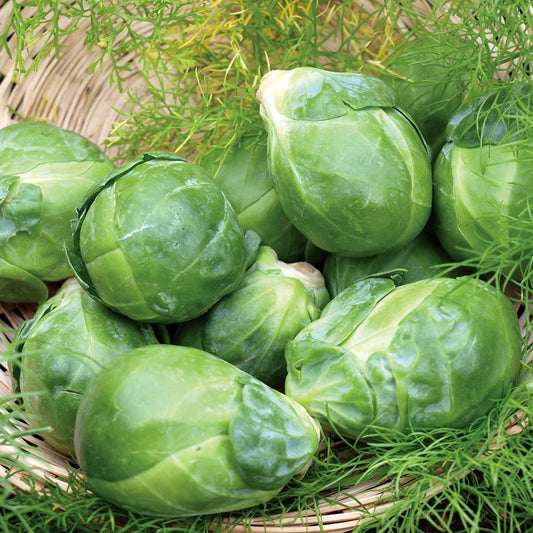
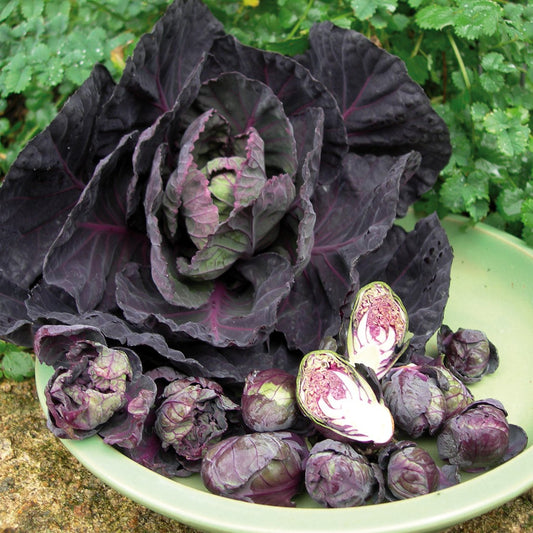
Harvesting sprouts when they reach around 2.5 to 4cm in diameter. Brussels sprouts should be firm and vibrant at harvest. Harvest with a knife on the stem to prevent damage to the main plant. Start harvesting from the bottom of the plant, working your way upward as the sprouts develop This will allow you to maximise your harvest, as the lower sprouts mature first.
Cook straight away for maximum flavour, nutrition and freshness.
Not the easiest crop to grow, but certainly one of the most rewarding, growing your own Brussels sprouts is one of the proudest moments in a gardener’s journey and will have you falling in love with these mini cruciferous crops all over again.
Featured Products
Member
$4.17
Member
$30.00
Retail
$37.50