
How to use a heat mat to start seeds
Germinating seeds indoors gives you heat-loving crops a jump-start on the growing season.

Depending on where you live, how the season is progressing and your local microclimate and soil conditions, the second half of winter is an excellent time to start thinking about getting a jump start on the growing season for some of your heat loving vegetables.
Most seeds have a minimum and maximum optimal temperature at which they germinate. Temperature is extremely important in having the highest germination success. Most edible plants germinate faster in warm soil whilst heat-loving vegetables need warm soil to germinate, which means starting them indoors with a heat mat and monitoring soil temperature. Heat lovers like tomatoes, chillies and eggplants need to be started indoors between four to six weeks before the last date of frost.
Soil temperatures for Solanaceous vegetables (chillies, tomatoes, and eggplant) is critical for seed germination. It’s recommended to grow these seeds in trays on top of a heat mat at 24C with plenty of light for 4-5 weeks. In the last week, before moving them outdoors you can reduce the temperature to 15-20C to toughen plants for transplanting.
What you will need:
1. Seeds
Growing healthy seedlings starts with healthy and high-quality seeds. If you have saved your own heirloom seeds then you can be assured they will be identical to their parent plant. When saving your own seeds, clean and dry them and then place them in a container that will keep them dry. Store seeds in a cool location.
2. Germination mix
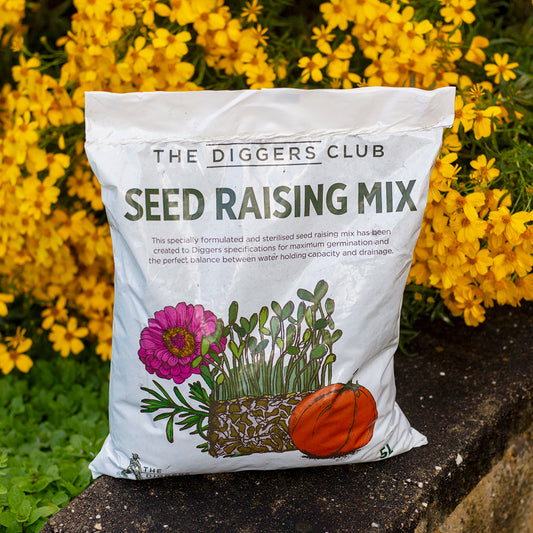
It is recommended to use a quality seed-raising mix which allows for air to circulate and can hold moisture, but still drains well.
3. A container
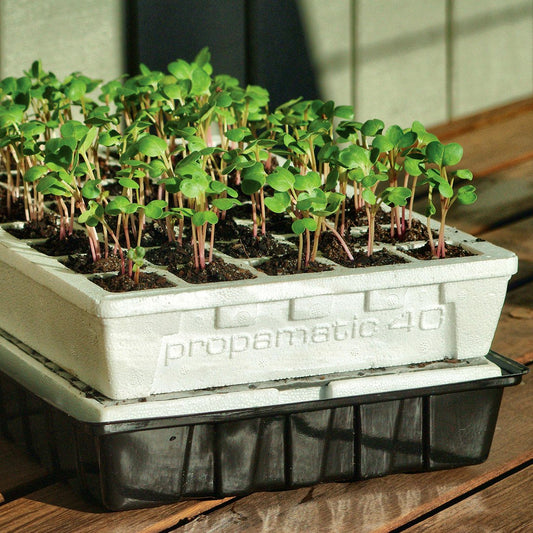
Heat loving seeds are best sown in punnets.
4. Light source
Place in a well-lit position.
5. Heat source
Using a heat mat will provide a consistent heat source. Once seeds have sprouted, the seedlings prefer slightly cooler temperatures, so a heating mat is no longer required.
6. Water
Germination begins with the seed absorbing water. An adequate, continuous supply of water is needed to ensure successful germination. Once the germination process has begun, try and avoid any dry or overly wet periods.
7. Harden off
When the seedlings are ready to be planted in the garden, they need to be hardened off by taking them outside in the shade and gradually getting them used to the outdoors for longer periods each day. On the last few days, set the punnets in the garden where they will be growing.
8. Plant
To transplant, carefully dig out and lift the small plant out of its punnet. Prepare its new location by making a hole the same size and depth as where the seedling was growing, once placed firm the soil and gently water. Then protect from any pests like snails and slugs.
More in Learn

Common germination problems & how to fix them
Here are the top most common germination problems and how to fix them.

How to Germinate Seeds: Fundamentals for success
For great success with seeds consider these three fundamentals for germination success

Diggers Seed Sowing Methods
For the process of germination to begin, there are certain conditions that need to be met.

Featured Products
Member
$37.35
Retail
$41.50
Member
$10.36
Retail
$12.95