
Growing an Edible Vertical Garden
Vertical gardening is an excellent way to turn a small footprint into a basketful of produce for your table.

Vertical gardening allows you to make the most of spaces that would otherwise be blank walls, fences and screens. There is a common misconception that people need heaps of room to grow their own food. Not so, there are many options available for gardening in small spaces, and vertical gardening is an excellent way to turn a small footprint into a basketful of produce for your table.
Now this is not only for people in the city with minimal garden space; this method of growing allows anyone to make the most of the space they have, reduce maintenance, improve yield per square metre and aids harvesting.
Most vegies need around 6 hours of sunlight per day. Find the right amount of sunlight, and you are already halfway towards growing your own produce.
Start with climbers
Many highly productive summer fruiting plants are vining, and therefore, possible climbing plants. Consider growing tomatoes, pumpkins, cucumbers, beans, zucchini and squash on a climbing frame, trellis or garden netting.
Most gardeners already grow some of these plants with vertical supports, so it is not difficult to imagine growing a few more plants in the same way. Yes, heavy pumpkins need support, but this can also be done with a simple seat or other support.
Selecting climbing varieties rather than bush type plants (such as beans) improves the yield per metre, giving you the same amount of produce in a fraction of the space. Try Bean ‘Purple King’ or ‘Lazy Housewife’, Pumpkin ‘Potimarron’ and patty pan squash.
Build it up
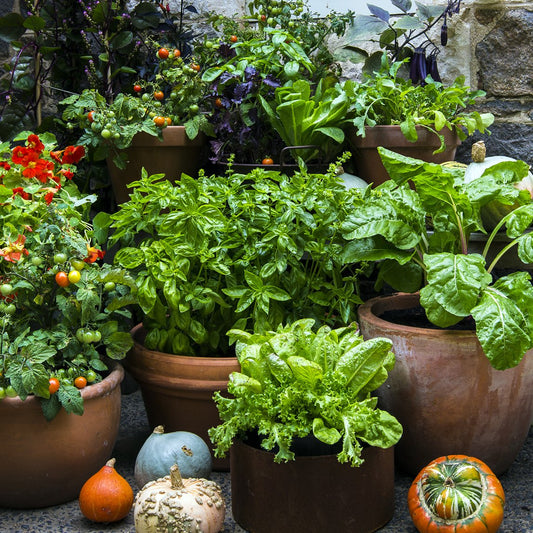
Many other varieties of produce can be grown in pots which are fixed to a vertical structure or wall. Windowboxes were one of the first methods of using this system, but you can expand this to large runs of guttering fixed to a fence to grow your own herbs, strawberries and lettuce.
A word of advice: when fixing pots or windowboxes to a fence, space them according to the final height of the produce plus 20cm to allow you room for adequate sunlight, watering and maintenance.
Vertical gardening solutions can be not only productive, but decorative too.
Hang it down
Hanging baskets are also a great way to make use of otherwise wasted space. They come in different sizes, allowing you to grow a wide variety of vegetables including chillies, strawberries and even beetroot and some varieties of carrot. Cherry tomatoes are also suitable for growing in this way.
Growing in pots
When growing in pots, baskets or anything other than directly into the soil, always use a premium potting mix, preferably organic when it comes to growing edibles and plants for your table. Like all potted plants, they will require regular watering, especially over hot dry periods. Fortunately, you can set up irrigation systems or select self-watering pots to make this even easier.
Whether you choose to make your own vertical gardening system, grow produce up a simple frame or trellis, or use a kit designed for growing up walls, always choose a location with at least 6 hours of sunlight per day to ensure you get maximum cropping and nutrition for your home grown vegies.
Simple reo can hold a variety of pots in a small space, offering a low cost and eye-catching vertical gardening solution.
Upcycled items are a great way to garden in a small space, and many pallets are made for hardwood, which means they last a long time and have not been treated with nasty chemicals.
More in Learn

How to plant and grow strawberries
Strawberries epitomise the leisurely, aromatic, and sweet essence of summer days. Discover how to plant and grow strawberries. The ultimate step by step guide.


Starting your mini-plot from seed
It only takes a few hours of work a week and a single 10m2 garden bed to feed one person or 40m2 of garden bed to feed a...

How to start a vegetable garden in 6 easy steps!
The ultimate step-by-step guide to growing a vegetable garden for beginners.
Featured Products
Member
$4.17
Retail
$5.95
Member
$7.96
Retail
$9.95